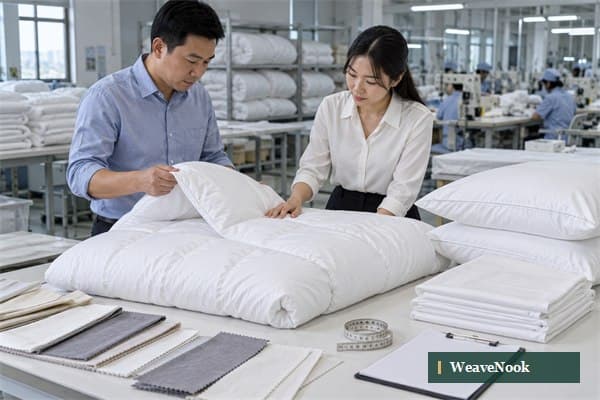
Direct answer: Connect the fabric specification, material lot, laboratory method and finished-product label. State the component being analysed: shell, filling, trim or complete item. Use the destination’s permitted fibre names rather than informal plant-based language. Supplier paperwork is useful traceability evidence, but it does not replace a suitable analysis when composition remains uncertain.
Introduction
A catalogue may call a duvet cover bamboo, a mill document may describe viscose and a draft retail label may say natural fibre. Those descriptions are not interchangeable. A buyer needs to establish the actual material, identify which product component it describes and use wording appropriate to the destination. The procurement problem is therefore both technical and documentary, not simply choosing a pleasant fabric name.
This bedding fibre composition verification guide explains how to connect specifications, samples, analysis and labels. It is not legal advice and does not claim a completed WeaveNook analysis or certification. Ask a suitable laboratory about the material and an appropriate market adviser about label requirements. Confirm current destination rules before approving consumer wording, especially for blends or plant-related marketing descriptions.
Begin with the exact bedding-set components being ordered. A collection may contain one fabric for the sheet, another for the cover and a different filling inside a quilted item. The phrase bedding material should not conceal that component map. The custom product brief is a useful place to record it.
Build a component-level material map
Separate shell, filling and trim
Bedding shell fibre declaration describes the shell fabric, not necessarily the complete article. A duvet can have a cotton shell and a different filling; a cover can contain embroidery, zipper tape and sewing thread in other materials. Identify the component covered by each statement. Do not create a total-product fibre percentage by mixing unrelated report results without a justified technical and regulatory basis.
List product code, component, supplier material code, claimed fibre composition and relevant lot. Include whether the material is woven, knitted or otherwise constructed, and record its finish where that affects identification or analysis. A small table provides a more useful purchasing record than a general statement that the collection is natural. It also helps reviewers select the right specimen for each question.
Keep commercial names distinct from fibre names
A mill’s brand or fabric nickname may describe a product family without specifying the actual fibre composition. Ask for the technical declaration and connect it to the purchase material code. The same commercial name can appear on several blends or finishes. Do not assume that last season’s material statement transfers to a new product simply because the sales name remains unchanged.
If the customer plans to use a fibre trademark, ask what authorisation and material documentation apply. A laboratory result confirming a generic fibre does not necessarily establish the right to use a trademark. Keep material identity, trademark use and marketing claims as separate approval questions. This article does not grant permissions or confirm any brand’s licensing requirements.
| Document | Useful role | Limitation |
|---|---|---|
| Supplier declaration | States the intended material and component | Needs traceability to actual supply |
| Laboratory report | Analyses the identified specimen within method scope | Does not automatically cover every lot |
| Approved label artwork | Controls customer-facing wording | Does not prove material identity alone |
| Lot and production record | Links materials to finished articles | Must remain consistent after substitutions |
Decide when textile blend laboratory analysis is needed
Ask what uncertainty the analysis should resolve. It may verify a quoted blend, investigate inconsistent paperwork or support a customer requirement. The laboratory should identify an appropriate approach for the fibres and finishes involved. Do not select a chemical procedure solely because its title says textile composition; some combinations require particular methods or additional identification work.
The ISO 1833-1 overview describes general principles for quantitative chemical analysis. Ask the lab to confirm the applicable method parts and current editions for the specific blend. Its general scope does not mean every material can be analysed by one universal process or that a buyer can reproduce the procedure safely from a brief webpage summary.
Send representative and identified specimens
Provide material code, component description, claimed composition, finish and the question being asked. Agree specimen quantity and preparation with the lab. If the analysis concerns bulk supply, define how the sample is selected from the relevant lot rather than sending only a development swatch. Retain a matched sample and record who selected and sealed it.
Do not remove coatings, labels or other features without laboratory instruction. Preparation can affect what is being analysed and reported. If the specimen is a composite construction, ask whether layers should be assessed separately. The report must state its sample boundary so the buyer does not interpret an inner layer result as a declaration for the complete fabric system.
Interpret uncertainty and rounding responsibly
An analytical result may differ slightly from a declared blend without supporting an immediate conclusion about deception. Ask the lab to explain the method, limitations and reporting basis, then compare with the destination requirement and agreed specification. This guide does not set a universal permissible difference. Keep technical uncertainty separate from contractual tolerance and legal labelling rules.
Cotton polyester blend confirmation should therefore include the tested sample and component, not just a pair of percentages copied into a spreadsheet. If evidence conflicts materially with the declaration, hold label approval and investigate. Do not revise consumer wording to an arbitrary average of supplier and laboratory values. Obtain a justified conclusion and document the action.
Turn this decision into a sample brief
Send the product type, target market, planned quantity and your bedding fibre composition requirements. We can discuss the information needed for a relevant sample and quotation.
Get a QuoteHandle bamboo-related wording carefully
The FTC bamboo-textile guidance distinguishes actual bamboo fibre from rayon or viscose made using bamboo as a source material. For a US-facing project, do not shorten a relevant regenerated-fibre description into an unsupported bamboo fibre claim. Confirm the actual material and destination-compliant terminology with an appropriate adviser before publishing the label or product page.
Rayon from bamboo bedding label decisions should not be based on the fabric’s softness or a supplier’s lifestyle photograph. Ask for the fibre declaration and supporting traceability. The source plant, manufacturing process and permitted name are different questions. A buyer can describe a documented material accurately without implying that it retains every property of the plant from which feedstock may originate.
Keep environmental and health claims separate
Composition evidence does not independently prove biodegradability, antibacterial performance or a low environmental impact. Each claim needs its own justified scope and evidence. Do not add those statements merely because a fibre is plant-derived or because the article feels breathable. If the customer wants a claim, identify it as a separate workstream rather than letting it emerge informally in marketing copy.
For a hypothetical cover described by its supplier as viscose made from bamboo, the procurement record could include the generic fibre declaration, source documentation and market-reviewed label wording. It would not automatically include a natural antibacterial claim. That example illustrates separation of evidence, not a legal determination for every jurisdiction or a statement about an actual WeaveNook product.
Create home textile material traceability
Connect the approved sample to fabric orders, incoming material lots and finished production records. Ask the supplier how it distinguishes visually similar materials and handles substitutions. A warehouse containing several white fabrics needs a practical identification system. The buyer should understand the traceability boundary rather than assuming that a laboratory report alone controls what reaches the cutting table.
Keep the map simple enough to use. Product code, component, approved material code, supplier lot and specification revision are often useful fields, but the exact system depends on the operation. Request relevant records for the order without claiming that this guide describes WeaveNook’s internal process. Project-specific capability and documentation should be confirmed directly.
Define substitution review
A proposed replacement may keep the same stated fibre blend while changing yarn, construction, finish or supplier. Composition is only one part of equivalence. Review feel, care, dimensions, appearance and any other customer requirements before accepting it. An analytically similar blend does not necessarily reproduce the approved bedding experience or performance.
Require written approval for changes affecting the material map. Identify whether new analysis or other testing is needed and who makes that decision. Keep earlier reports as history but mark the current applicable evidence. Factory testing and shipment inspection should both use the latest approved material reference rather than separate folders containing conflicting versions.
Approve labels and website copy together
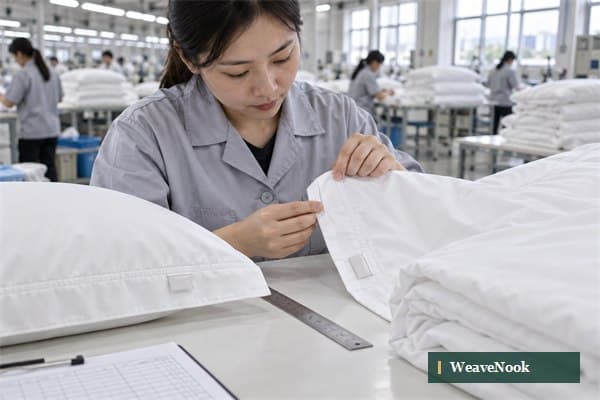
The sewn label, packaging, product page and quotation should describe the same material scope. A accurate inner label can be undermined by an exaggerated website headline, while a careful product page can conflict with a bag describing a whole duvet as cotton. Review every consumer-facing location and identify which component is being named. Keep the approved artwork revision with the order.
Confirm destination-specific obligations with a qualified adviser. Fibre composition, business identification, origin and care communication may have different requirements and scopes. Do not automatically apply apparel-only care rules to every home textile or assume that one label format works worldwide. This guide provides an evidence workflow, not a complete regulatory checklist for every market.
Ask precise questions before artwork release
Useful questions include whether the label describes the shell or whole item, whether the blend wording matches the declaration, and whether any trademark or special claim is authorised. Ask who checks translations and regional versions. A late artwork correction can delay packaging even after fabric production is complete, so schedule this review before final labels are printed.
Keep a signed digital artwork and a physical print or sewn sample. Check legibility, component scope and placement on the actual article. A correct PDF can still be printed with missing text or attached to the wrong SKU. Shipment inspection should verify the approved label version and material identity within the agreed sampling plan.
Use testing milestones before shipment
Set development, bulk-material and release evidence requirements according to project risk. A first-order buyer may need independent confirmation of the proposed material; a repeat programme may rely on a defined control system with targeted verification. Make the plan explicit. Do not promise that testing one swatch certifies every future lot, or demand unnecessary repeated work without a clear question.
The bedding testing checklist helps connect composition evidence with other assessments. Reserve enough time for sample dispatch, analysis, clarification and corrective action. If composition is essential to a retail claim, resolve it before labels and website copy go live. A pending report should not be represented as a completed certification.
Investigate conflicts through the full record
If supplier paperwork, lab analysis and packaging differ, identify which sample and lot each document covers. Review whether a substitution occurred or whether the declaration describes a different component. Ask the laboratory about method scope before concluding that one document is wrong. Preserve records and request a corrective plan tied to the actual order.
Do not solve a conflict only by changing the website. The delivered labels, cartons and commercial documents may also need correction, and affected goods may require review. Agree the scope and release authority with the customer. The action should restore consistent, supportable material information across the supply chain rather than hide the inconsistency in one channel.
Retain matched samples for later questions
Agree who stores the unused specimen and a finished article from the same approved configuration. Label the retained material with product, component, lot, date and revision, and keep it protected from conditions that could compromise later assessment. A photograph of a sample envelope is not the specimen itself. If a dispute arises, the retained evidence can help the parties select a meaningful follow-up analysis.
Define access and replacement rules as part of the purchase record. If a reference is consumed by testing, record that event and retain the report. Do not replace it silently with a new swatch from a different lot. Matched buyer and supplier references improve traceability, but they still need the supporting records that explain what each sample represents.
Frequently Asked Questions
Does a supplier declaration replace laboratory analysis?
It provides useful information but does not automatically resolve every uncertainty. Determine whether analysis is needed for the customer requirement, material risk and claim. When testing is requested, connect the result to an identified component and lot. Keep the declaration and analytical evidence together rather than treating them as interchangeable documents.
Can a shell report describe the whole duvet?
Not automatically. The duvet may contain filling, trims and other materials outside the shell specimen. State the component scope clearly and confirm the destination’s labelling approach. Do not combine unrelated percentages into a whole-product claim without a justified technical and regulatory basis. Component identity is essential to accurate interpretation.
Is soft bamboo-looking fabric necessarily bamboo fibre?
No. Appearance and feel do not establish fibre identity. Verify the declaration and suitable evidence, and review permitted market wording. Regenerated fibres made using bamboo as feedstock should not be confused with actual bamboo fibre. Avoid extending a plant-related description into environmental or health claims unsupported by separate evidence.
What should happen when a fabric is substituted?
Review composition, construction, finish and the other product requirements. Decide which evidence needs renewal and obtain written approval before use. Update the material map, sample revision and labels where relevant. A replacement with the same generic blend may still behave differently in fit, laundering or feel, so composition alone does not prove equivalence.
Conclusion
Verify bedding materials at component level and maintain a clear path from specification to sample, analysis, lot and label. Use destination-appropriate fibre names and keep broader claims separate. Resolve conflicts before artwork and shipment release. This gives buyers supportable product information without relying on vague natural-fibre language or overstating what one laboratory specimen establishes.
Primary sources and method boundaries
Sources reviewed September 28, 2026. Illustrative calculations and proposed review checklists are not certified test results. Confirm the applicable method, edition and acceptance limits with your laboratory and customer.
Send your project requirements
Contact info@WeaveNook.com with the specification, care route, quantities and delivery destination. WeaveNook is based in Shenzhen with an 8,000 m² factory; project-specific capabilities and test evidence must be confirmed for your order.
Send Your Requirements