
Direct answer: A bedding shipment inspection should check the agreed sample or specification, product quantity, visible workmanship, measurements where sampled, labels, packing, carton markings and the buyer’s defined acceptance criteria. Arrange the inspection timing and scope before the order is packed or booked for collection.
1. Define the buyer decision
Shipment inspection is the final opportunity to compare packed goods with the approved reference before dispatch. It should be planned around the buyer’s critical requirements, not treated as a generic end-of-line ritual.
Inspection can confirm what has been agreed; it cannot repair an ambiguous brief. The most effective final check starts with an approved sample, current specification and a clear list of points that matter to the product application and destination market.
2. Build a checkable specification
The following points turn this buying question into details that can be stated in an RFQ and reviewed on a finished sample.
Reference standard
Provide the approved sample, final specification, artwork and packing instructions. Inspectors need a clear source of truth for the order.
Sampling scope
Agree the inspection method, sample size, acceptance criteria and any critical points with the buyer’s quality team or third-party inspector.
Product checks
Select checks relevant to the item: dimensions, fill distribution, closures, seam appearance, fabric condition, label position or product function.
Packing checks
Confirm inner packing, carton count, shipping marks, barcode or SKU identity, visible carton condition and any pallet or loading requirement.
Ready to compare a real specification?
Send your bedding shipment inspection guide requirements for a focused quotation and sample discussion.
Get a Quote3. Set the sample and inspection route
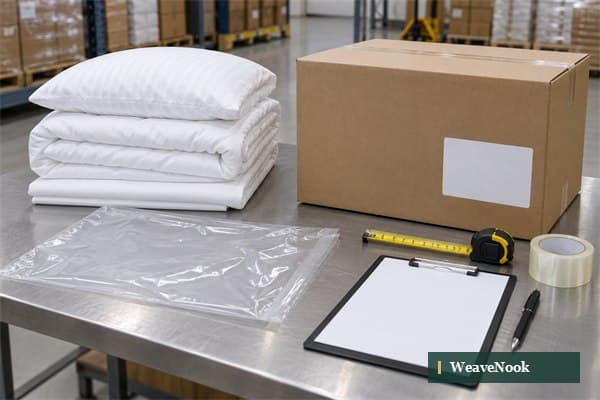
Shipment inspection preparation includes making the order accessible, identifying the approved references and confirming the packing status. If cartons are opened for inspection, agree how re-packing and final count confirmation will be managed before the inspection date.
4. Compare the available approaches
| Inspection input | Purpose | Risk if absent |
|---|---|---|
| Approved sample | Physical visual and hand-feel reference | Subjective comparisons |
| Final specification | Measured and material reference | Different interpretation of requirements |
| Packing list and marks | Shipment identity and count reference | Receiving and logistics discrepancies |
5. Avoid these sourcing mistakes
- Booking inspection without providing an approved reference
- Checking only product appearance and not labels or packing
- Waiting until the forwarder is collecting goods to define inspection timing
- Assuming a passed inspection changes unapproved product requirements
Frequently asked questions
What is normally included in a bedding inspection?
The scope is agreed by the buyer, but often includes quantity, workmanship, selected measurements, labels, packing, carton marks and conformity to the approved reference.
Can cartons be opened for inspection?
Yes, subject to the agreed inspection and re-packing plan. Coordinate the process so the final packed quantity remains clear.
Does shipment inspection replace in-line quality checks?
No. In-line checks help identify issues during production; final inspection confirms the finished order before dispatch.
When should inspection be booked?
Book it when the expected completion and packing status are known, leaving enough time for any agreed follow-up before collection.
Turn this decision into an approved brief.
Share the product application, quantity and the specification points above. WeaveNook can then discuss samples and a quotation based on the same finished-product requirements.
Send Your Requirements