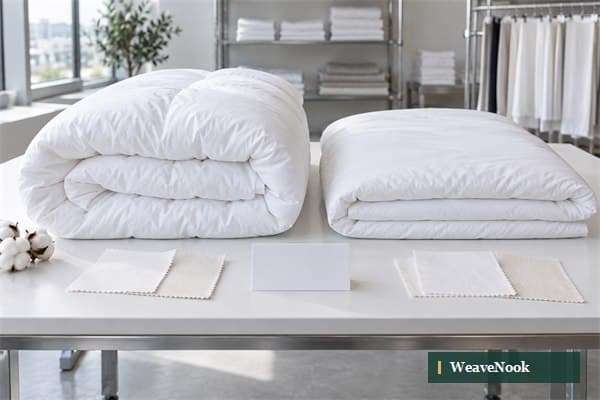
Direct answer: Separate raw-fill odor, drying, fabric finishes and post-packing moisture exposure. Quarantine affected lots, compare unopened controls and obtain suitable tests before assigning cause or promising a remedy.
Introduction
An unusual smell in a down duvet can trigger a broad claim that the filling was poorly cleaned. That may be the cause, but it is not the only plausible explanation. Fabric finishing, packing materials, incomplete drying, warehouse conditions and exposure during transit can all contribute to what a buyer detects when opening a carton. A complaint about a few units should therefore prompt a controlled investigation, not an instant declaration that every duvet is defective or that a fragrance treatment will fix the problem.
This article provides a down duvet odor investigation framework for B2B buyers. It explains how to secure evidence, compare unopened controls, identify plausible sources and decide which laboratory tests fit the question. It does not diagnose a particular shipment or claim that WeaveNook has passed tests on a specific lot. Odor perception can differ among reviewers, so the workflow uses consistent handling and explicit observations rather than dramatic language.
The down-comforter product category gives the product context. The separate container-moisture packing guide considers transit conditions; here the focus is the finished duvet and the complaint chain. Keep those two levels connected. A dry and well-prepared product can still face transit exposure, while a good container plan cannot correct a wet product sealed at the factory.
Stabilise the affected stock first
Record the complaint without changing the evidence
Ask the customer for SKU, batch, carton identifiers, number of affected units, opening time, storage conditions and photographs of packaging. Note whether the smell appeared immediately, after the duvet was spread out, or after washing. Record how long units stayed compressed or sealed. Do not spray, launder, sun-dry or discard the first affected specimens before a review plan is agreed; those actions can change the condition that needs to be understood.
Hold the implicated cartons separately from unaffected goods while the scope is assessed. Avoid placing strong-smelling packing materials or chemicals near control samples. A traceable hold is less disruptive than a blanket statement that all stock is unsafe or acceptable. Decide who may open cartons, how many to select and how to protect sealed controls. If there is evidence of water damage or visible biological growth, use appropriate occupational and specialist advice; this purchasing guide is not a safety diagnosis.
Build comparison groups
At minimum, compare an affected duvet with a sealed unit from the same lot and, if available, a retained pre-shipment sample. A neighbouring SKU that used the same fill but different shell or bag can help isolate a packaging or finishing variable. However, comparison is meaningful only when samples are identified and evaluated under similar conditions. Record the time after opening, room conditions and reviewer observations in neutral terms.
Use more than one reviewer when practical, but do not turn a small informal panel into a quantified laboratory claim. Describe the character and location of the odor: inside a chamber, at the shell surface, in the polybag, at a printed card or carton. Separate a temporary sealed-package smell from a persistent smell in the filling. Keep notes linked to the actual specimen. “Strong smell” without timing, location or comparison gives the supplier little useful information.
| Possible source | Initial observation | Follow-up question |
|---|---|---|
| Down or feather fill | Odor remains when isolated from shell | Which fill lot and cleaning record apply? |
| Shell or finish | Odor appears strongest on fabric surface | Which fabric lot and finishing process changed? |
| Inner bag or printed insert | Bag or card smells separately | Was packing material changed or insufficiently cured? |
| Moisture exposure | Damp carton, condensation or weight change | At what handoff could water have entered? |
| Storage environment | Similar smell on nearby unrelated goods | What warehouse or transit history is shared? |
Separate moisture evidence from odor evidence
Moisture is a hypothesis, not a diagnosis
Down and feather can absorb water, and moisture conditions matter to weight and product handling. The IDFL overview of down and feather tests lists moisture content, odor and cleanliness-related assessments separately. Ask a competent laboratory which tests suit the material and complaint. A dry-feeling shell does not prove that filling was dry when sealed, and a damp carton does not prove the fill lot was initially problematic.
Measure packaging condition and record any humidity evidence with the time and location of collection. A portable meter reading taken after a carton has stood open for hours may not describe conditions during shipment. If desiccants were used, note their type, amount, placement and status, but do not claim they guarantee dryness. Review the route, container loading and receiving records before assigning responsibility to one stage.
Verify the drying process that was specified
A production brief should set the intended cleaning and drying controls for the chosen filling and care route. During an investigation, request process records for the affected fill lot and identify any change in washing, drying, storage or repacking. A supplier may have valid routine checks, but a generic process diagram does not establish the condition of the specific lot. If material was reworked or blended, capture that history.
Avoid recommending extra heat without checking the shell, labels, fill and safety instructions. A duvet can be damaged by inappropriate laundering or drying. A sample recovery trial may be useful, but it should be authorised, observed and kept distinct from the original evidence. “The smell disappeared after airing” may inform a use question; it does not by itself prove the original cause or whether a retail customer would accept the product.
Turn the decision into a sample brief
Share the product, target market, planned quantity and down duvet odor investigation criteria. We can discuss a suitable sample and quotation route.
Ask for Product CatalogSelect laboratory tests for the suspected mechanism
Do not order a large test bundle without a question
The IDFL odor evaluation method description is a starting point for discussing a filling-material assessment. Ask the laboratory whether the method applies to the isolated fill, a finished article or both, and how it reports the outcome. Other questions may need moisture-content, fat-and-oil or cleanliness-related analysis. Each result answers a defined question. One satisfactory number cannot prove that no smell could ever be perceived in another packing state.
If the odor seems to come from a printed bag, adhesive or finish, a down-specific test may be irrelevant. Identify the actual material and seek appropriate specialist testing. Where a buyer suspects a chemical compliance issue, use destination-market requirements and a qualified lab rather than a generic “safe” claim. Some smells are noticeable without indicating a regulatory breach; some compliance concerns are not detectable by smell. Do not conflate sensory observation with chemical safety.
Preserve chain of custody
Take photographs before opening a test specimen. Record who selected it, when it was opened and how each component was separated. Use clean tools and containers so the sample is not contaminated by another material. If both an affected and control specimen are submitted, ask the lab to identify them clearly and, where feasible, evaluate them under comparable conditions. A second lab result should reference a fresh sealed sample unless the method explicitly allows reuse.
Keep the original report, laboratory method, specimen identity and any caveats with the complaint file. A statement such as “odor test passed” without method, material and date is too weak for a buyer decision. The team should also record what was *not* tested so that a narrow result is not turned into a broad exoneration or accusation.

Investigate likely process and packaging contributors
Audit the filling and shell paths separately
Trace the fill lot through receipt, storage, dosing and sewing. In parallel, trace the shell-fabric lot, washing or finishing, printing, labels and inner-bag supply. Compare timelines with unaffected SKUs. If only units packed in one type of bag show a smell, test that hypothesis before changing the fill. If all products using one fill lot are affected across several shells, fill becomes a higher-priority question. These are investigative patterns, not proofs.
Ask whether products were packed before they reached the intended drying and conditioning state. A carton closeout timestamp can help, but does not measure internal moisture. Storage and loading records may reveal a prolonged exposure or a change in route. The shipment-inspection planning guide explains how to set lot boundaries and release authority; apply that discipline when deciding the affected population.
Check the complaint in its real use context
A duvet may be used inside a cover, unpacked in a hotel laundry room or displayed in a retail store. Evaluate the complaint after realistic preparation without masking it. If the product is intended to be aired before use, instructions must be clear and reasonable; they should not be invented after a complaint to excuse an unacceptable product. Retail buyers should consider whether a customer opening a sealed polybag would perceive the same condition as an inspector in a ventilated factory.
Care labels and packaging instructions must align. A recommendation to wash before use is not a substitute for delivering conforming goods, and some down products have special care needs. If a corrective trial involves washing, compare the original and treated sample under the agreed care route and inspect loft, migration and shell condition. An apparent odor solution that damages the product is not a successful correction.
Decide on disposition with bounded claims
After evidence review, classify what is known, what remains possible and which lot is affected. The buyer may choose extended holding, additional sampling, airing under controlled conditions, approved rework, replacement or rejection. Each option should have an acceptance criterion and person authorised to release goods. Do not relabel a chemically different product or substitute packing materials without change control. Any new treatment needs its own compatibility and market review.
If no cause is confirmed, say so. A documented inconclusive result is more trustworthy than an invented factory story. Preserve affected and control specimens until the claim is resolved. If a lab finds an issue with filling material, trace every SKU using that lot before deciding scope. If the issue is packaging, determine whether goods can be repacked safely without losing traceability or compromising retail presentation.
For the next order, implement a preventive check tied to the discovered mechanism: fill moisture control, material qualification, packing-material ageing or container handling. Do not add a ceremonial inspection step that cannot detect the fault. Review whether the revised check works on pilot units before scaling. Document the change and its effect on price or lead time; preventative action should be operational, not merely a sentence in a supplier email.
Write an odor-aware sourcing brief
Provide fill composition, shell and finishing route, packaging format, compression state, storage window, destination climate and intended first-use preparation. Ask the supplier which materials carry odor risk and how they are controlled. Specify complaint evidence to retain and the laboratory contact process. A buyer choosing a strongly printed retail bag or treated shell should examine those materials alongside the down filling rather than assuming the fill is the only possible source.
For a new private-label range, keep a sealed retained sample from the approved packaging and a separate unpacked reference. Record when each was prepared. A small pilot shipment can expose packaging and transit interactions before a large order is committed. The purpose is not to promise an odor-free experience under every possible condition; it is to make the ordinary opening condition observable and to resolve complaints fairly.
Frequently Asked Questions
Does an odor always mean the down was poorly cleaned?
No. Filling is one possible source, but shell finishes, bags, printed materials, storage and transit exposure may also contribute. Compare affected and unopened control units, isolate components carefully and select tests for the actual suspected source. Do not decide cause from smell alone without a traceable investigation.
Should I air out a sample before assessing it?
Record the immediate opening condition first, then an agreed later observation if useful. Airing changes the evidence and may hide a problem the consumer would notice. Use the same timing and environment for comparisons, and keep the original sealed controls intact until the investigation plan is set.
Can a moisture meter reading settle the complaint?
Usually not by itself. The instrument, material and timing determine what the reading means. Down-filling moisture, carton dampness and warehouse humidity are different observations. Ask a qualified laboratory for a relevant method if moisture content is central to the decision, and retain packing and transit records alongside the result.
What should happen if only a few cartons smell unusual?
Identify those cartons and their shared production or logistics history, hold them and sample nearby stock under a pre-agreed plan. Avoid assuming the rest of the order is good or bad without evidence. Expand or narrow the affected population as facts emerge, and document who may release or rework the units.
Conclusion
An odor complaint deserves a controlled sequence: hold the affected stock, preserve sealed controls, locate the smell, trace materials and handling, and choose tests that answer the suspected mechanism. Keep sensory observations separate from laboratory findings and safety judgments. When the evidence is limited, say so. That approach gives buyers a fair disposition decision and suppliers a practical path to prevent recurrence.
Primary sources and method boundaries
Sources reviewed October 9, 2026. Illustrative calculations and proposed review checklists are not certified test results. Confirm the applicable method, edition and acceptance limits with your laboratory and customer.
Send your project requirements
Email info@WeaveNook.com with sizes, materials, care route, volumes and destination. Project-specific evidence and capability must be confirmed for your order.
Send Your Requirements