
Direct answer: A private-label bedding packaging brief should state the product SKU, artwork, label content, inner bag or box, insert, barcode, folding method, carton quantity, shipping marks and destination requirements. Approve the product and its packaging together, because a good package must fit the actual finished item.
1. Define the buyer decision
Packaging is part of the product experience and part of the shipping plan. For private-label bedding, it needs to communicate the brand clearly while protecting bulky soft goods, carrying required information and fitting the chosen retail or e-commerce channel.
Packaging choices affect perceived value, packing speed, carton utilization and the risk of damage. A gift-box concept may suit a premium retail launch, while a compact bag and clear insert may be more practical for e-commerce replenishment.
2. Build a checkable specification
The following points turn this buying question into details that can be stated in an RFQ and reviewed on a finished sample.
Brand and product information
Provide approved logo files, colour references, product name, composition, care copy, origin language, barcode and any customer-required claims.
Primary packaging
Specify bag, box, sleeve, ribbon or insert material, dimensions, transparency, closure and whether the customer needs to inspect the product without opening it.
Folding and presentation
Define fold direction, display-facing panel, insert placement and compression approach so the intended presentation can be repeated during packing.
Export carton
State carton count, maximum weight or size limits where relevant, pallet preference, shipping marks and any e-commerce fulfillment requirements.
Ready to compare a real specification?
Send your private label bedding packaging guide requirements for a focused quotation and sample discussion.
Get a Quote3. Set the sample and inspection route
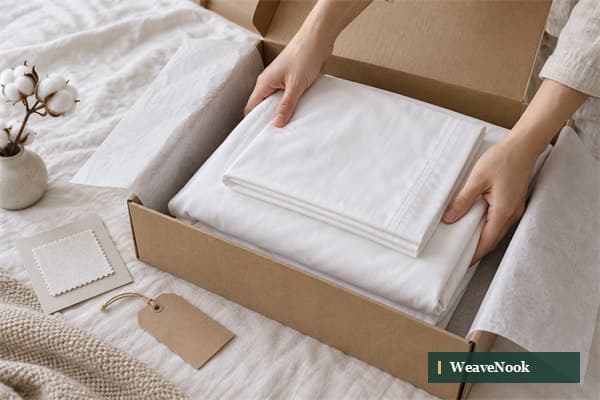
Packaging should be tested with the finished product, not an estimated volume. During sample approval, check folding, label readability, barcode position, carton count and whether compression changes the product appearance or recovery.
4. Compare the available approaches
| Packaging format | Typical fit | Planning question |
|---|---|---|
| Printed bag + insert | Compact retail or e-commerce programs | Does it protect the finished bedding and show the key information? |
| Presentation box | Premium gift or shelf display | Can the finished item be folded consistently into the approved box? |
| Bulk inner bag + export carton | Hospitality or contract supply | What identification is needed for receiving and room setup? |
5. Avoid these sourcing mistakes
- Approving packaging artwork before the final product size is confirmed
- Treating care and composition copy as a marketing afterthought
- Ignoring carton and pallet constraints
- Specifying a premium box without checking how it performs in shipment
Frequently asked questions
When should private-label packaging be approved?
Approve product and packaging together before bulk release, after the finished item, folding method and required copy are known.
Can bedding packaging include custom inserts?
Yes. Provide the size, material, artwork, language, placement and quantity per SKU in the packaging brief.
What should a carton mark include?
Use the receiving or logistics information required by the buyer, such as PO, SKU, quantity, destination and handling marks where applicable.
Why does folding matter?
Folding affects package fit, shelf presentation, packing speed and how the bedding looks when the customer opens it.
Turn this decision into an approved brief.
Share the product application, quantity and the specification points above. WeaveNook can then discuss samples and a quotation based on the same finished-product requirements.
Send Your Requirements