
Direct answer: A useful hotel bedding brief states the finished size, fabric and fill, construction, care routine, target market, packaging and expected order quantity. It should also name the sample approval points and the shipment inspection criteria, so purchasing and production teams are working from the same reference.
1. Define the buyer decision
A hotel bedding quotation is only as useful as the brief behind it. This guide turns a room concept into measurable choices for duvets, pillows, sheets, covers, labels, packing and inspection.
For hotel programs, comfort is only one part of the decision. Housekeeping routines, room turnover, replacement cycles, storage space and the property’s brand position determine whether a material or construction is practical after the first guest stay.
2. Build a checkable specification
The following points turn this buying question into details that can be stated in an RFQ and reviewed on a finished sample.
Room and bed matrix
List every room type, mattress size and bed presentation. This prevents a king-size duvet, pillowcase or fitted-sheet specification being copied incorrectly across room categories.
Shell and fill
Specify shell composition, fabric weight or construction where relevant, fill type, declared fill weight and desired warmth or loft rather than using only terms such as premium.
Construction and finish
Record quilting pattern, seam allowance, piping, closure type, hemming, label position and colour reference. These are the details guests see and laundry teams handle.
Care and packing
State washing and drying expectations, care-label language, inner bag, carton count, shipping marks and any retail presentation requirements before the final quotation.
Ready to compare a real specification?
Send your custom hotel bedding specification checklist requirements for a focused quotation and sample discussion.
Get a Quote3. Set the sample and inspection route
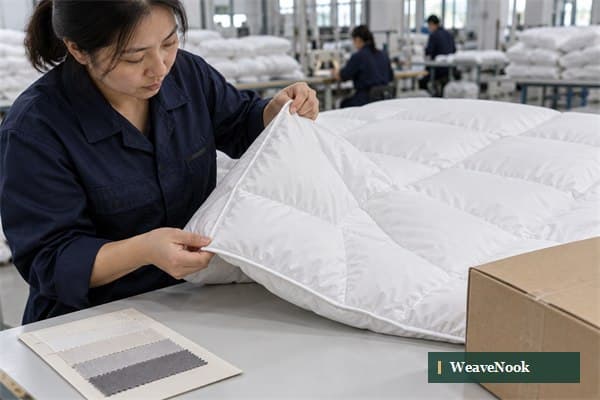
During factory testing and sample review, check the details that will repeat at scale: finished dimensions, fill distribution, stitch density, label placement, carton count and the feel of the product after the agreed handling method.
4. Compare the available approaches
| Brief level | Typical outcome | Buyer risk |
|---|---|---|
| Concept-only request | Broad estimate with assumptions | High: assumptions may differ between suppliers |
| Measured specification | Comparable quotation and sample plan | Lower: construction points are visible |
| Approved sample + inspection sheet | Controlled bulk-production reference | Lowest: acceptance criteria are documented |
5. Avoid these sourcing mistakes
- Comparing a price without confirming fill composition and fill weight
- Using an inspirational photo as the only product instruction
- Leaving labels and export packing until after sample approval
- Treating a pre-production sample as a substitute for an inspection plan
Frequently asked questions
What should a hotel bedding spec include?
Include product dimensions, material composition, fill type and weight, construction, labels, care instructions, packing, target market and inspection requirements.
Should each hotel room type have a separate brief?
Use a shared master brief where products repeat, then attach a room-and-size matrix so exceptions are visible without duplicating every technical detail.
When should packaging be confirmed?
Confirm the packing plan before the final sample or production release, because bag size, carton quantity and labels can affect both cost and shipment preparation.
Can a manufacturer advise on specifications?
A manufacturer can explain practical construction and production implications, but the buyer should approve the final requirements for the intended property, market and care routine.
Turn this decision into an approved brief.
Share the product application, quantity and the specification points above. WeaveNook can then discuss samples and a quotation based on the same finished-product requirements.
Send Your Requirements