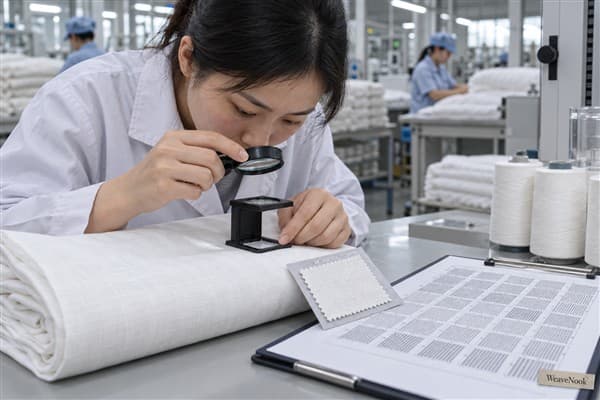
Direct answer: Check fibre composition, yarn type, weave, fabric weight or density, finish, finished hand feel and performance requirements together. Thread count can describe woven sheet fabric, but it is not a universal quality score and does not replace a declared fibre content, construction or finished-sample review.
1. Define the buyer decision
Fabric language can make two quotations sound alike when the underlying yarn, weave, weight and finishing are different. A buyer needs a specification that describes the actual finished cloth and the performance expected from it in the intended application.
Use thread count only where it is meaningful to the woven construction, and ask how it is stated. For blankets, cushions, fills and many knitted fabrics, GSM, pile, construction, fibre blend and test requirements may be more useful controls.
2. Build a checkable specification
The following points turn this buying question into details that can be stated in an RFQ and reviewed on a finished sample.
Fibre declaration
State the requested fibre composition and any required claim or documentation; a trade name or marketing description is not a substitute for a composition target.
Yarn and weave
Record the intended yarn direction where known, weave or knit construction, and the desired balance of crispness, drape, opacity and durability.
Weight and finish
Use GSM or another relevant finished-fabric measure where applicable, and define finishing expectations such as brushing, peach finish or wrinkle appearance through an approved sample.
Claim verification
If thread count is used, place it beside composition, construction and the approved sample; request clarification of any counting convention before copying a claim to packaging.
Ready to compare a real specification?
Send your home textiles fabric and thread count sourcing requirements for a focused quotation and sample discussion.
Get a Quote3. Set the sample and inspection route
During fabric approval, compare the approved swatch and finished sample under consistent lighting and handling. Factory testing should check the defined construction and finished dimensions, while shipment inspection should ensure the bulk product uses the approved labels and SKU identity rather than making unverified performance claims.

4. Compare the available approaches
| Specification method | Useful for | Limitation |
|---|---|---|
| Thread count | Certain woven sheet constructions | Does not explain fibre quality, weave or finish alone |
| GSM | Many sheets, blankets and decorative fabrics | Does not by itself define hand feel or construction |
| Approved fabric standard | Repeatable bulk comparison | Needs tolerances and revision control |
5. Avoid these sourcing mistakes
- Selecting the highest advertised thread count without reviewing yarn and weave
- Using GSM as a substitute for a finished hand-feel approval
- Copying fibre or performance claims from an unverified sample
- Failing to distinguish greige fabric from finished fabric in the brief
Frequently asked questions
Is a higher thread count always better?
No. The fibre, yarn, weave, finishing and intended use all affect the finished fabric. Compare a complete specification and physical sample.
What should appear on a fabric specification?
At minimum, record composition, construction or weave, relevant weight or density, colour, finish, finished width where useful and the approved sample reference.
Can one fabric work across an entire range?
Sometimes, but sheets, decorative cushions, blankets and filled products may need different constructions even when their colour palette is shared.
How should thread-count claims be handled?
Use clear, supportable language for the actual fabric construction and verify the proposed claim before it appears in product communication.
Turn this decision into an approved brief.
Share the product application, quantity and the specification points above. WeaveNook can then discuss samples and a quotation based on the same finished-product requirements.
Send Your Requirements