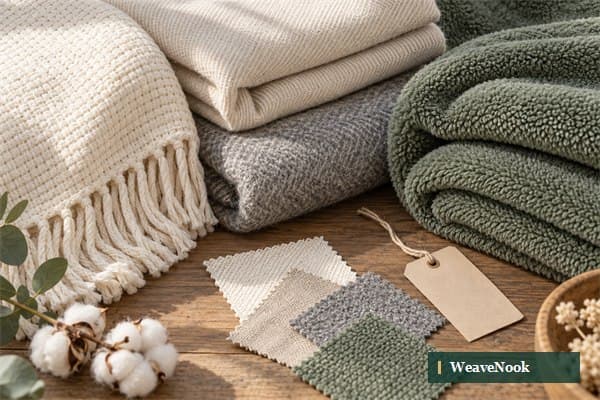
Direct answer: GSM states fabric mass per unit area, not the insulation of the finished blanket. Compare structure, pile, trapped air, care state and an appropriate thermal test for the actual intended use.
Introduction
Blanket buyers often compare fabric GSM as a shortcut for warmth. GSM states mass per unit area, but warmth depends on how the finished blanket resists heat transfer in a defined context. Two blankets with similar GSM can have different pile heights, loft, weave density, yarn structures and trapped-air volumes. A heavier one may drape differently without necessarily delivering the thermal experience the buyer expects. Calling GSM a warmth rating can lead to the wrong seasonal assortment and misleading product copy.
This guide explains blanket thermal resistance versus GSM for retail, hospitality and private-label sourcing. It focuses on how to make a fair comparison and specify evidence rather than declaring one fibre or number best. It does not report WeaveNook thermal tests or make universal temperature claims. A laboratory method, physical sample and intended bedding system each answer a different part of the purchasing question.
Explore the blanket category and define whether the project concerns a fleece throw, woven blanket, layered bed blanket or decorative cover. The blanket fabric guide offers broader material choices; this article concentrates on warmth claims and the difference between mass and insulation.
Distinguish mass from thermal behaviour
What GSM measures
GSM is grams per square metre of fabric. It can support costing, handling and consistency checks, but the reported area and condition matter. A small specimen cut from the centre of a roll may not describe a finished blanket with binding, fringe or pile variation. State whether the number refers to the base fabric before finishing or the completed blanket’s fabric after finishing. The bedding GSM measurement guide explains the sampling issue in more detail.
Higher GSM can reflect thicker yarn, denser weave, more pile or heavier finishing. Those constructions do not affect trapped air in the same way. If one sample has a raised fleece pile and another is dense and flat, their mass may match while their thermal feel differs. Buyers should compare actual construction, thickness and care state rather than assuming mass translates directly into warmth.
What a thermal-resistance result can show
Thermal resistance describes opposition to heat flow under a specified test. The IDFL TOG and CLO overview explains TOG as a thermal-resistance unit familiar in bedding. Whether a particular method is suitable for a blanket depends on its thickness and construction. Ask the testing partner to select and report a method appropriate to the finished article. Do not turn a fabric swatch result into a claim about a bound, washed blanket without evidence.
A lab result does not predict every sleeper’s experience. Room temperature, mattress, sheet, clothing, air movement and personal preference all matter. If the blanket will be used in a layered hotel bed, test or trial it within that system. If it is a sofa throw, consider whether the user will fold it double. State the application before choosing a target thermal range.
| Metric or observation | Useful for | Does not prove |
|---|---|---|
| Fabric GSM | Material mass and consistency | Finished warmth |
| Finished blanket mass | Handling and freight | Thermal resistance per area |
| Thickness or loft | Construction comparison | Thermal rating without method |
| TOG or thermal test | Controlled insulation comparison | Universal comfort temperature |
| User trial | Drape and perceived feel | Certified numerical performance |
| Care trial | Change after specified laundering | Unlimited service life |
Specify the intended blanket application
Hotel and retail priorities differ
A hotel may need a machine-washable blanket that dries reliably, folds consistently and coordinates with existing linen. A retail throw may prioritise tactile softness, decorative texture and packaging presentation. A high-pile fleece can look warm on a shelf but may shed or change appearance after care. A dense woven blanket may have a premium drape but different breathability. The RFQ should describe the user and care route so suppliers propose relevant constructions.
For a seasonal assortment, avoid using “summer” and “winter” as the only technical distinctions. Define target mass range, construction, measured thermal evidence if required, and the layered use assumption. Two seasonal SKUs can share a fibre content but vary by pile or density. Give each a separate product code and sample. If marketing needs a warmth label, verify that the evidence supports the exact wording in the target market.
Consider drape and hand feel
A blanket can be thermally effective but uncomfortable because of stiffness, weight distribution or excessive bulk. Place it over a bed or sofa and observe how it conforms to the user. Heavy edges or binding can change drape even though the GSM of the central cloth is unchanged. Evaluate an assembled blanket rather than a loose swatch. A useful buyer matrix separates warmth, softness, weight, drape and care.
The same blanket can feel different when folded, layered over a duvet or used alone. State which use the supplier should optimise. If the product is intended for a hospital or regulated setting, additional standards may apply; do not extend this ordinary home-textile guide to those applications without specialist review.
Turn the decision into a sample brief
Share the product, target market, planned quantity and blanket thermal resistance vs gsm criteria. We can discuss a suitable sample and quotation route.
Get a QuoteBuild a comparable sample trial
Keep variables identifiable
Select candidate blankets with documented fibre content, fabric construction, GSM, finished dimensions, edge treatment and care. Condition them similarly before weighing or judging feel. A compressed fleece removed from a small bag may need a defined recovery interval. Compare against a reference blanket if the buyer has one, but note its age and care history. A worn reference is useful for user preference, not necessarily a fair new-product test specimen.
If the question is whether pile height improves warmth, compare fabrics with otherwise similar fibre, mass and backing as far as feasible. If the question is whether a heavier blanket is worth the extra freight and handling, compare fully costed products and measured thermal outcomes. Do not change material, finish and size simultaneously and then attribute a result to GSM. Code samples and retain the trade-off record.
Test new and cared-for states
If the blanket will be laundered regularly, agree a care sequence and assess thickness, shrinkage, shedding, edge integrity and thermal behaviour afterward. The ISO 139 overview concerns standard atmospheres for textile testing; apply the chosen test method’s preparation rules to any formal measurement. A buyer’s practical care trial should also use consistent drying and recovery. A blanket that appears flat immediately after drying may recover with handling, or may have suffered persistent pile collapse; document timing.
The fleece shedding test guide addresses a separate quality issue that can matter to hotel laundry. A blanket’s thermal result cannot excuse unacceptable lint transfer or a weak edge. Approve the whole article for the intended service, not just its warmth label.
Choose a suitable thermal method
Beware of wrong-scope standards
Not every textile thermal standard covers a thick blanket. The public ISO 5085-1 summary identifies a low-resistance method with a thickness limitation. A supplier should not cite it casually for a thick lofty article without confirming suitability. Ask the laboratory what specimen size, thickness range, conditioning and method it proposes. The final report should state the actual test, not a standard name copied into a quotation.
If a buyer wants a numeric TOG claim, agree whether it applies to a finished blanket, representative fabric or layered system. Specify acceptance tolerance and how measurement uncertainty is handled. A blanket with decorative border, different pile zones or quilting may require careful specimen selection. A number measured at the centre should not be presented as an exact property of every point without caveat.
Interpret results as part of the product
Suppose two hypothetical blankets have the same GSM but different measured thermal resistance. Inspect pile, loft and backing before deciding why. If the heavier-feeling sample is less insulating, the buyer may still prefer its drape for a decorative programme. If the lighter one meets the warmth target, it may reduce freight or storage burden. This illustration is not a factory result; it demonstrates why mass and performance need separate columns.
Avoid translating TOG directly into a guaranteed room-temperature rating. The method offers controlled comparability. Product copy should be clear about relative warmth and use, with market-specific review for numerical claims. Avoid health, child-sleep or fire-safety claims unless independently supported for the exact product. A blanket’s function can be described honestly without overpromising.
Inspect the finished blanket and production lots
Verify finished size, fabric mass as specified, overall blanket mass if relevant, pile or weave appearance, edge construction and care label. Sample across rolls, colours and production dates. If a colourway uses a different dye or finish, assess whether its hand or thickness changed enough to warrant retesting. A lab report from one colour may be technically relevant to another, but the assumption should be documented rather than automatic.
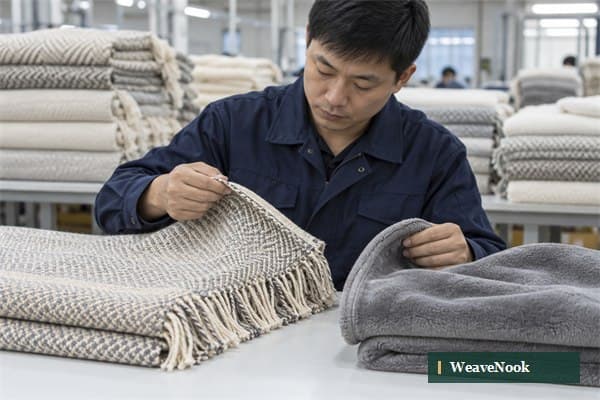
For warm-feeling fleece, check pile uniformity at edges and corners. For woven blankets, inspect density and yarn pulls. The blanket edge inspection guide helps specify binding, corners and perimeter stability. These details affect both service life and the way the blanket lies on a bed. Do not let a compliant central swatch hide a poorly finished article.
If a shipment shows a drift in weight or thickness, first confirm scale, size and conditioning. Then trace fabric roll and finishing lot. A heavier result may reflect moisture or a process change, not an intentional warmth upgrade. Hold affected units if the change could invalidate the approved sample or label. The lot-sampling guide provides a structure for release authority.
Receiving teams should use the same definitions as the purchasing team. If the order states central-fabric GSM, an inspector should not calculate it by dividing a finished blanket’s total weight by its outer dimensions; binding, labels, fringe and cut geometry distort that shortcut. Conversely, a fabric-swatch report does not confirm the mass of every finished SKU. Put the measurement route in the inspection sheet and reserve any destructive specimen in advance. This small discipline prevents a normal difference between component and whole-product measures from becoming a false nonconformance report.
Compare offers on a whole-product basis
Request fibre content, weave or pile construction, GSM with method, finished dimensions and mass, edge finish, care route, packaging, optional thermal report and quote. Show the cost of testing separately if it is not included. Compare freight volume and retail presentation. A blanket that is cheaper per kilogram of fabric might need more material to achieve the desired feel; another might be expensive but justify a premium position. Neither case can be decided from GSM alone.
For hotels, include laundry drying time and handling observations, but do not invent precise energy savings from a small sample. A controlled pilot at the target property can reveal whether staff find a blanket easy to fold, dry and store. Record the process before claiming a total-cost advantage. For retail, validate customer-facing imagery against the packed product’s actual thickness and texture.
Write the supplier brief
State the intended use, target market, size, fibre preferences, warmth positioning, desired hand, care, edge style and quantity. Ask for two named constructions with their GSM, finished mass and physical samples. If a numerical thermal target matters, commission a suitable method and describe when it is tested. Set sample approval, first-bulk check and change-control gates.
Do not ask the supplier to “make it 50 GSM heavier” unless that is truly the intended design change. If the complaint is that a current blanket feels cold, the remedy could involve pile, weave, layers or the entire bedding system. Ask for development options and compare outcomes. Clear purchase questions produce more useful samples than a single unexamined mass target.
Frequently Asked Questions
Does higher GSM always mean a warmer blanket?
No. GSM measures mass per area. Warmth depends on structure, loft, trapped air, shell or backing, care state and test conditions. Two blankets with the same GSM may behave differently. If a warmth claim matters, compare representative finished samples with an appropriate thermal method.
Can I compare TOG reports from any two laboratories?
Only if the methods, sample states and reporting conditions are comparable. Ask each lab for the method edition, specimen, conditioning and uncertainty information. A fabric swatch result should not be compared directly with a finished blanket result without technical review.
Should blanket warmth be retested after washing?
When retained warmth is a key requirement, agree a care sequence and retest plan. Also inspect thickness, pile, dimensions and edge integrity. A post-care result describes the tested sample under that protocol, not the blanket’s entire lifetime. Record the number and conditions of cycles.
Is finished blanket weight the same as fabric GSM?
No. Finished mass includes its entire area, binding, fringe, labels and any additional components. GSM describes a sampled fabric area under a stated method. Both can be useful, but neither should be mislabeled as thermal resistance.
Conclusion
GSM is a useful construction and costing control, not a warmth rating. Define the blanket’s application, compare finished samples, select a suitable thermal method if needed and test the relevant care state. Keep mass, loft, drape and insulation as separate evidence. That lets buyers build honest seasonal ranges and choose products for use rather than for the largest number on a specification sheet.
Primary sources and method boundaries
Sources reviewed October 9, 2026. Illustrative calculations and proposed review checklists are not certified test results. Confirm the applicable method, edition and acceptance limits with your laboratory and customer.
Send your project requirements
Email info@WeaveNook.com with sizes, materials, care route, volumes and destination. Project-specific evidence and capability must be confirmed for your order.
Send Your Requirements