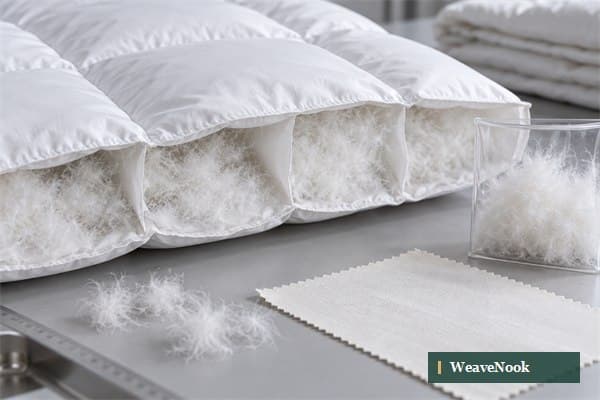
Direct answer: Fill power describes a measurement related to the lofting ability of down under a defined test method; it does not, by itself, state how warm or heavy a finished comforter will feel. Compare fill power together with composition, fill weight, comforter size, construction and the test method or report requested for the program.
1. Define the buyer decision
Fill power is frequently used in down-comforter conversations, but it is only one part of a finished product. B2B buyers need a complete view that connects fill-power information with fill weight, size, shell and construction.
A high figure can look persuasive in a catalog, but procurement decisions should be based on the product the guest or end customer receives. Two comforters with similar fill-power claims can differ materially when their fill quantity, chambers, shell fabrics and finished sizes are different.
2. Build a checkable specification
The following points turn this buying question into details that can be stated in an RFQ and reviewed on a finished sample.
Test context
Ask what method, conditioning and sample basis apply to a test report. A number without context is harder to compare responsibly.
Fill weight
Fill weight must be stated for the finished size. It contributes directly to the amount of insulating material in the completed comforter.
Composition and construction
Down-to-feather composition, baffle or quilt construction and chamber distribution influence loft, movement and perceived warmth.
Shell fabric
The shell affects hand feel, breathability, downproof performance and total product weight, so it belongs in the same approval package.
Ready to compare a real specification?
Send your down comforter fill power explained for buyers requirements for a focused quotation and sample discussion.
Get a Quote3. Set the sample and inspection route
For a down-comforter program, factory testing and sample approval should verify the finished dimensions, fill quantity, construction layout, seam closure, shell appearance and packing recovery. If an external laboratory report is requested, agree the required report and timing in the project plan.

4. Compare the available approaches
| Question | Useful evidence | Why it matters |
|---|---|---|
| What is the fill-power basis? | Applicable test report or stated test method | Makes the number interpretable |
| How much fill is in this size? | Declared fill weight and finished dimensions | Connects the claim to the finished product |
| How is fill held in place? | Construction drawing and approved sample | Shows distribution and product appearance |
5. Avoid these sourcing mistakes
- Treating fill power as a standalone warmth rating
- Comparing different comforter sizes without normalizing the fill quantity
- Using a laboratory claim in marketing without confirming the approved documentation
- Ignoring the construction that controls fill distribution
Further reading from a primary source
For terminology and current program requirements, consult Textile Exchange’s Responsible Down Standard resources and IDFL testing information. Verify relevance to your own material and finished-product scope.
Frequently asked questions
Is higher fill power always better?
It may be relevant to loft potential, but the right specification depends on the desired finished product, climate, fill weight, construction and customer position.
What should be on a down-comforter specification sheet?
Include shell composition, down-and-feather composition, fill power where applicable, fill weight, size, construction, labels, packing and requested testing.
Can suppliers provide test reports?
Discuss the exact report, product basis, testing body and timing before production; do not assume a report for one material automatically covers every finished product.
Where can buyers learn about down testing?
IDFL publishes background on testing services and Textile Exchange publishes RDS resources; use the applicable primary documents for your own program requirements.
Turn this decision into an approved brief.
Share the product application, quantity and the specification points above. WeaveNook can then discuss samples and a quotation based on the same finished-product requirements.
Send Your Requirements