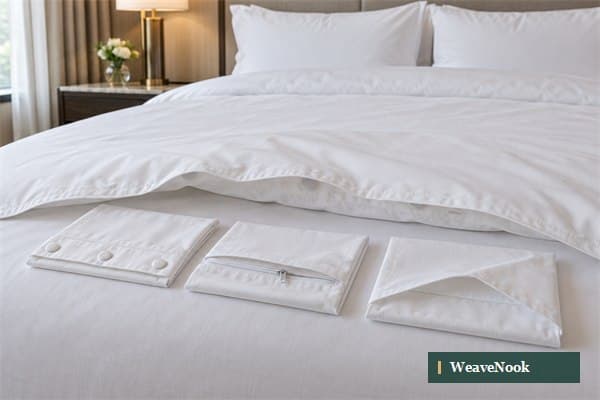
Direct answer: Choose a closure by evaluating the intended user, laundering routine, visual direction and risk of snagging or loss. Buttons, zips and envelope closures can all be appropriate when the closure placement, reinforcement, dimensions and care requirements are specified clearly.
1. Define the buyer decision
A duvet-cover closure is a small component with a large effect on user experience, production detail and packing. The right choice depends on the product application, styling direction, care routine and target price position.
The closure should not be selected from a thumbnail image alone. Buyers need to consider the matching duvet size, the opening width, the ease of inserting the duvet, the finish on the inside and how the component will behave during repeated handling.
2. Build a checkable specification
The following points turn this buying question into details that can be stated in an RFQ and reviewed on a finished sample.
Closure type
Name the requested style and material, such as button, concealed zip or envelope end, rather than using a general request for a hotel-style closure.
Opening and placement
State the opening location, usable width, overlap or placket arrangement and any reinforcement points so the pattern and sewing plan are clear.
Care and user handling
Consider whether the cover will be commercially laundered, frequently changed or used as retail bedding. The service routine affects which details are practical.
Visual finish
Specify piping, flange, stitch line, button colour, zip pull and inside presentation when those details are visible to the end customer.
Ready to compare a real specification?
Send your duvet cover closure types wholesale requirements for a focused quotation and sample discussion.
Get a Quote3. Set the sample and inspection route
Sample review should include opening width, closure alignment, seam reinforcement, finish on the inside of the cover and the ease of inserting the approved duvet size. Check these points again during in-line inspection because closure details are easy to vary without a clear sample reference.

4. Compare the available approaches
| Closure | Typical strength | Specification question |
|---|---|---|
| Buttons | Classic visual detail | What button type, count and reinforcement are required? |
| Concealed zip | Clean external appearance | What zip length, placement and pull treatment are approved? |
| Envelope end | No separate hardware | What overlap depth keeps the duvet in position? |
5. Avoid these sourcing mistakes
- Specifying a closure type without its placement and dimensions
- Approving a zip without reviewing the inside finish
- Using a retail decorative closure for a heavy commercial-laundry application without review
- Forgetting that the duvet size affects the required opening width
Frequently asked questions
Which closure is best for hotel duvet covers?
The best option depends on housekeeping handling, laundry practice, visual style and the approved construction. Specify the use case before choosing.
Can buyers customize zip or button colour?
Yes, but colour, material, size, placement and any brand detail should be included in the approved sample and specification.
What should be inspected on a duvet cover closure?
Check placement, opening width, stitch quality, alignment, security, inside finish and function with the intended duvet size.
Does an envelope closure need a measurement?
Yes. The overlap depth and opening design should be measured so the cover performs consistently in bulk production.
Turn this decision into an approved brief.
Share the product application, quantity and the specification points above. WeaveNook can then discuss samples and a quotation based on the same finished-product requirements.
Send Your Requirements