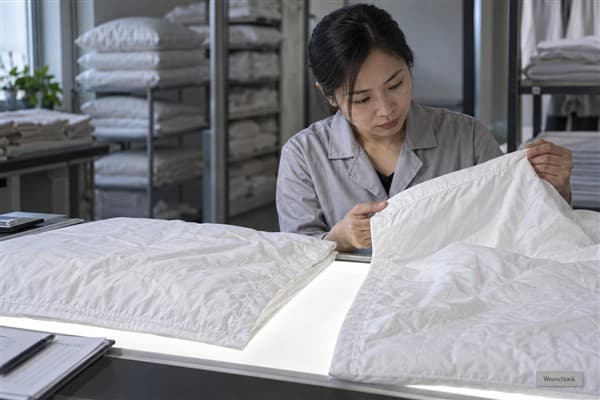
Direct answer: Compare quality by matching the complete delivered product: material, finished size, construction, visible workmanship, care fit, labels, packing and inspection criteria. A product can look similar in a photo while using different fabric, fill, seam construction or packaging, so comparison must start with a common written brief.
1. Define the buyer decision
Quality is not a single grade that can be proved by a price, a fabric name or a certification logo. For B2B buying, it is the product’s ability to meet the agreed application consistently across samples, bulk production and delivery.
Build a scorecard around the customer requirement, then compare samples on the same basis. Hospitality may weigh laundering and replenishment; retail may weigh presentation and repeatability; online programmes may weigh fit, product identity and packaging clarity.
2. Build a checkable specification
The following points turn this buying question into details that can be stated in an RFQ and reviewed on a finished sample.
Material match
Compare declared composition, construction, relevant weight or fill and finished hand feel against the same approved target.
Workmanship and durability cues
Review seams, hems, closures, quilting, fill distribution, trims and visible consistency on a representative finished sample.
Functional fit
Check size, care, recovery after packing, colour direction and product application rather than separating appearance from use.
Control system
Ask how the approved sample, current revision, in-line checks, final inspection and shipment records connect to the order.
Ready to compare a real specification?
Send your home textiles quality comparison sourcing requirements for a focused quotation and sample discussion.
Get a Quote3. Set the sample and inspection route
A quality comparison becomes more credible when it includes the path to repeatability. During factory review, inspect the actual production steps relevant to the item and agree which records identify the approved material, size, label and packing. A third-party shipment inspection can be planned against that same accepted reference.

4. Compare the available approaches
| Comparison input | What it can show | What it cannot show alone |
|---|---|---|
| Catalog image | Design direction | Material, size or bulk consistency |
| First sample | Initial hand feel and construction | Repeatability without a written reference |
| Approved sample plus specification | A checkable production benchmark | Supplier capability outside the stated scope |
5. Avoid these sourcing mistakes
- Ranking samples by softness before checking composition and construction
- Comparing prices with unmatched set contents or packing
- Using vague terms such as hotel quality as an acceptance criterion
- Ignoring how the product will be washed, packed and received
Frequently asked questions
What is the best way to compare two samples?
Use one specification and score the measurable material, size, construction, appearance, care and packing points against the intended application.
Does a higher price prove better quality?
No. Price may reflect different materials, quantities, packing, terms or production assumptions; compare the complete configuration.
Should inspection criteria be written down?
Yes. Written criteria make expectations clearer for the buyer, factory and any agreed inspection party.
Can a factory recommend alternatives?
Yes, but each alternative should state the technical and commercial difference so the buyer can compare it transparently.
Turn this decision into an approved brief.
Share the product application, quantity and the specification points above. WeaveNook can then discuss samples and a quotation based on the same finished-product requirements.
Send Your Requirements