
Direct answer: For hotel linen replacement planning, buyers should evaluate par levels, room counts, laundering capacity, reserve stock and SKU continuity as one finished-product decision. A reliable brief records the target use, measurable specification, approval sample, care route, packing and inspection points before price comparisons or bulk production begin.
1. Define the buyer decision
This guide is for purchasing teams sourcing replenishment linen. The most useful supplier conversation starts with the end application and a measurable brief, then turns each customer requirement into something that can be sampled, checked and delivered.
A viable replenishment linen program is not defined by one headline claim or a catalogue photograph. It is defined by whether the materials, construction, care routine, presentation and receiving plan work together for the intended customer. Separate operational stock assumptions from the first delivery quantity so replenishment decisions are transparent.
2. Build a checkable specification
The following points turn this buying question into details that can be stated in an RFQ and reviewed on a finished sample.
Product application
Record the destination market, customer type, sales or operating channel and the role of replenishment linen in the full range. These points frame the technical and commercial decisions that follow.
Material and construction
Specify par levels, room counts, laundering capacity, reserve stock and SKU continuity with a finished sample or controlled reference. Describe what is required, which points remain open for recommendation and what must be consistent at bulk scale.
Approval and factory testing
Set a representative sample route before material commitment. Define the measurements, appearance, labels, packing and any agreed test or care checks that will be reviewed against the approved brief.
Shipment and receiving
State the SKU matrix, carton count, packing format, shipping marks and inspection scope. The delivered product should be identifiable and checkable by the receiving or fulfilment team.
Ready to compare a real specification?
Send your hotel linen replacement cycle requirements for a focused quotation and sample discussion.
Get a Quote3. Set the sample and inspection route
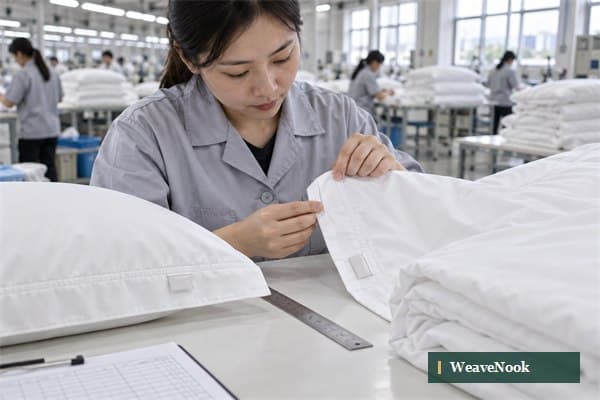
For replenishment linen, factory testing and shipment inspection should follow the approved specification, not a general quality statement. Teams should retain the current sample, product dimensions, labels and packing record so the final review can compare like for like.
4. Compare the available approaches
| Planning method | What it misses or controls | Recommended use |
|---|---|---|
| Room count only | Does not show laundry or reserve need | Use only as a starting point |
| Par-level plan | Links rooms and operating cycles | Confirm with housekeeping |
| SKU continuity plan | Protects future matching orders | Keep approved references and labels |
5. Avoid these sourcing mistakes
- Using guestroom count as the only quantity input
- Changing white tone or size identity between repeat orders
- Ignoring storage and receiving limits
- Not retaining a reference sample for future replenishment
Frequently asked questions
What is a linen par level?
It is an operational stock concept used by hospitality teams to plan how many sets are needed across rooms, laundering and reserve. Each property should set its own working requirement.
Why keep a repeat-order reference?
A retained sample and current specification help protect the size, material, colour, labels and packing identity of replenishment orders.
Can replenishment orders have different MOQ?
They may. Discuss SKU quantities and material availability early with the supplier.
Turn this decision into an approved brief.
Share the product application, quantity and the specification points above. WeaveNook can then discuss samples and a quotation based on the same finished-product requirements.
Send Your Requirements