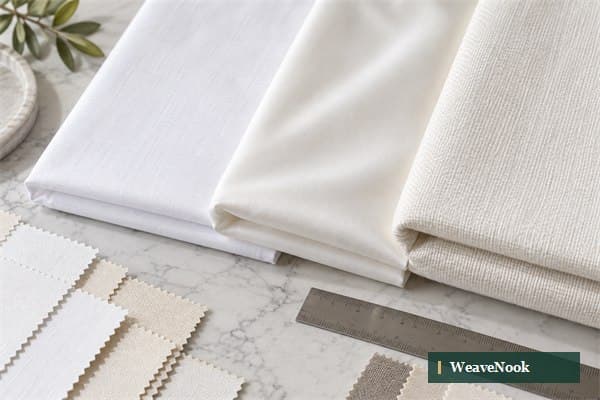
Direct answer: Tensile and tear tests ask different questions. Select methods, fabric directions and conditioning that fit the woven sheet, then compare results with a buyer-agreed benchmark rather than a generic durability claim.
Introduction
When a hotel asks for “stronger sheets,” a supplier may offer one impressive strength number. But a fabric that resists being pulled apart in a strip test can behave differently when a small nick begins to tear. Tensile strength and tear resistance are related but distinct properties. Weave density, yarn, finishing and laundering can affect them in different ways. A buyer needs to ask which failure actually matters in the intended service and choose evidence accordingly.
This guide proposes a hotel sheet tensile strength test and tear-resistance plan for woven sheets. It does not set universal pass values or claim that a particular WeaveNook fabric has achieved a result. The aim is to make methods, fabric directions, care states and comparison benchmarks explicit before a purchase decision. The hotel should also evaluate comfort, fit and laundering cost; a fabric chosen solely for a high strength figure may be undesirable in use.
Start with the bed-sheet range and define the application. A luxury guest-room sheet, a high-turnover economy sheet and a healthcare-related product may face different priorities and regulatory contexts. This article is general hospitality sourcing guidance, not a medical textile specification. The hotel sheet thread-count and GSM guide explains why those descriptive numbers should not be mistaken for strength evidence.
Define the two strength questions
Tensile tests pull a fabric specimen to a defined endpoint
The ISO 13934-1 overview specifies a strip method for maximum force and elongation at maximum force of textile fabrics, mainly woven materials. A report should state specimen direction, preparation and method. “Strong fabric” without a test method and direction is not a comparable claim. The hotel should ask whether both warp and weft are relevant to its sheet cutting plan.
Tensile performance can indicate how a fabric withstands distributed pulling, but it does not directly predict every tear initiated by a sharp edge or damaged laundry machine. Nor does it prove the seam, hem or finished sheet is strong. If a complaint involves seam opening, inspect that mechanism separately. Do not apply a fabric tensile result as a blanket certificate for a made-up article.
Tear tests propagate a pre-existing cut or opening
The ISO 13937-2 overview addresses tear force with a trouser-shaped specimen. Other tear methods exist and can yield different values. The buyer should specify the method and not compare two reports that merely share the word “tear.” A high tensile result may coexist with disappointing tear resistance in some fabric structures. Treat each as a separate column in the approval matrix.
Tear testing is relevant where a sheet may be nicked by handling, damaged equipment or a weak fabric point, but the test is not a literal simulation of every laundry event. Examine the source of actual field failures before deciding which metric deserves most attention. If current sheets are mainly lost to stains or colour change rather than tearing, a large strength campaign may not be the highest-value intervention.
| Question | Appropriate evidence | Limit of interpretation |
|---|---|---|
| Distributed pulling across cloth | Tensile method in stated direction | Does not prove seam or tear resistance |
| Growth of a cut or notch | Named tear method | Does not reproduce every real snag |
| Strength after care | Same method on conditioned washed specimens | Depends on the chosen care route |
| Finished sheet integrity | Hem, seam and handling inspections | Does not replace laboratory fabric test |
| Economic durability | Hotel replacement and complaint data | Requires controlled operational records |
Sample fabric in a way that supports the decision
Record warp and weft
Woven fabric directions may have different yarn counts and strengths. Mark the direction on each specimen before cutting, and confirm how production sheets are oriented. A decorative stripe, fitted-sheet pattern or fabric-width constraint can change orientation. Do not average warp and weft results into a single number if one direction is the limiting factor for the application. Show individual results as well as summary statistics.
Sample from the actual production-ready fabric, not only a mill’s development swatch. Dyeing, finishing and mechanical treatment can change strength. If several colours or finishes are offered, decide whether each requires testing or whether a justified representative grouping is possible. Make that decision before results arrive. A broad certificate covering “100% cotton sheets” may be too unspecific for a high-value order.
Use consistent conditioning
Standard textile methods specify or reference conditioning. ISO 139 provides the standard-atmosphere framework. Ask the laboratory to report sample state and method edition, especially when comparing two suppliers. A damp fabric, freshly dried sample and conditioned control are not necessarily equivalent. A buyer cannot fairly rank them if preparation differs.
Retain physical swatches linked to test reports and fabric lots. If the lab cuts several specimens, record their positions across the roll where that matters. An edge section can differ from centre fabric. The sampling plan should be proportionate to the claim and quantity. One small swatch can screen a candidate, but may not represent a full shipment of multiple rolls.
Turn the decision into a sample brief
Share the product, target market, planned quantity and hotel sheet tensile strength test criteria. We can discuss a suitable sample and quotation route.
Get a QuoteCompare strength before and after the intended care route
Make laundering conditions explicit
Hotel sheets can undergo repeated institutional washing, drying and finishing. Obtain the operator’s real process: temperature, chemicals, load, drying, pressing and any bleaching. A supplier’s domestic care label may not represent that route. Decide whether to test new fabric, fabric after a defined number of cycles, or both. Do not describe a short accelerated trial as a precise number of years of service without evidence.
Measure dimensions and inspect surface appearance alongside mechanical strength. A sheet can retain a strong fabric result while shrinking beyond usable fit or developing an unacceptable hand. Conversely, a moderate reduction in tensile force may not be commercially decisive if the material remains fit for purpose under the contract. The acceptance window should be tied to observed application needs and a known benchmark, not the highest possible raw number.
Use a current incumbent as a benchmark carefully
An existing successful sheet can provide context. Sample an unused or known-care-history piece if possible. A worn sample with unknown laundering cycles is not a fair laboratory comparator to new fabric. If the hotel has failure records, separate damage from seam failure, tears, stains, yellowing and shrinkage. This tells the buyer whether material strength is actually the priority. Do not generalise a result from one property or laundry plant to all customers.
For a hypothetical comparison, suppose Fabric A has higher new tensile force but loses more after the agreed care sequence, while Fabric B starts lower but retains a more stable hand and dimensions. The buyer should review the end-use limits and cost, not automatically pick A. This example contains no test values and is not a WeaveNook finding. It illustrates why test state and broader performance matter.

Investigate failures with correct attribution
Torn panel versus opened seam
Photograph the damage and note where it starts. A tear from a snagged edge differs from yarn slippage at a seam. If stitching fails, a stronger fabric may not help. If repeated cuts occur at a particular laundry-machine contact point, improving fabric alone may have limited benefit. Bring operations and textile teams together before redesigning the sheet. The article on pillowcase seam slippage shows why failure classification matters across different products.
If the sheet includes a narrow hem or label sewn near a stress point, test the finished construction as needed. Fabric swatch strength is valuable but not a proxy for a hem that gathers or a seam whose needle holes weaken the cloth. A supplier may propose a larger seam allowance, different thread or alternative finish; each change should be trialled on a finished sheet and costed.
Check whether the fabric is damaged before use
Incoming roll inspection should look for obvious weaving faults, thin spots and handling damage. A good average lab result does not excuse local defects. Map unusual failures to roll, position and production date. If damage appears only after cutting or sewing, inspect equipment and handling. A quality-control response should identify the affected population rather than simply citing a previous fabric certificate.
Do not use an AQL acceptance plan as proof that no defective unit can ship. The bedding lot-sampling guide explains the sampling decision. For strength-critical claims, combine appropriate material tests, process control and finished-product inspection. Those layers answer different questions and support a more defensible release decision.
Specify an acceptance approach
Avoid importing arbitrary numerical thresholds
A test method describes how to measure, not necessarily what a hotel must accept. The buyer and qualified technical partner should set limits based on a suitable benchmark, product position, variability and method uncertainty. A requirement far beyond the needed performance may drive cost or undesirable hand feel. A very loose requirement may fail to discriminate among candidates. Run development trials before committing to a contractual minimum.
State whether the limit applies to each specimen, the mean or another statistic. Define how to handle a result close to the boundary and whether retesting is allowed. Specify sampling population and method edition. These details are less glamorous than a headline “high strength” claim but prevent disputes. A supplier should not learn the acceptance rule only after submitting its sample.
Keep the quote comparable
Ask each supplier for fabric construction, fibre content, yarn details where relevant, finish, mass per area, intended care, new and post-care strength evidence, finished size and price. If the test plan adds cost, show it. Compare the same method and preparation wherever possible. If a supplier offers a different method, ask for the reason and do not convert results casually. The chosen fabric should be approved as a full sheet on a bed as well as a strip in a lab.
Translate the plan to bulk production
At incoming inspection, verify the fabric roll identity and approved specification. Reserve swatches from representative rolls for targeted testing if required. During sewing, watch for damage from needles or edge finishing. At shipment inspection, check dimensions, hems, visible fabric faults and care/lot labels. A full tensile or tear test on every sheet is unrealistic; decide which specimens are destructive and how their results map to the lot.
If a mill changes yarn, weave or finish after approval, reassess whether previous strength evidence applies. Do not accept a substitution simply because thread count and GSM remain similar. Changes in those descriptive properties can coexist with meaningful mechanical differences, and identical headline numbers can conceal a different fabric. Keep the approval sample, report and bill of materials aligned.
The incoming and outgoing checks should also agree on which part of the fabric roll is represented. When a mill splices rolls or a cutting room changes the lay direction, a report from a retained swatch may no longer map cleanly to the finished lot. Preserve roll identifiers through cutting where practical. If a complaint later identifies a weak sheet, the buyer and supplier can then locate companion units and decide whether to expand testing. This is a traceability measure, not a claim that testing every square metre is feasible.
Prepare a buyer-ready brief
State the hotel application, existing failure history, sheet sizes, fabric and care route. Ask for separately reported tensile and tear results using named methods and relevant warp/weft directions. Include whether results are needed before and after care. Define a provisional comparison benchmark and the process for setting final acceptance values. Request a finished-sheet sample for fit, hand feel and hem inspection.
Discuss total cost honestly. A fabric that lasts longer in one hotel’s process may not do so elsewhere; avoid invented replacement-cycle savings. A pilot at the target property can provide useful operational evidence if its duration and sample size are recorded. Use that evidence to revise the specification, not as a blanket guarantee to every market.
Frequently Asked Questions
Are tensile and tear strength interchangeable?
No. Tensile methods apply a distributed pull to a specimen; tear methods assess propagation of an opening under a defined geometry. The results have different units and meaning. Choose the method that addresses the actual failure concern, and report fabric direction and preparation for both.
Does a high thread count prove strong hotel sheets?
No. Thread count describes yarn ends and picks under a counting convention. It does not establish tensile or tear performance. Yarn quality, weave and finishing also matter. If strength is part of the purchase decision, ask for relevant mechanical tests on the production-ready fabric.
Should strength be measured after laundering?
If repeated care is central to the hotel application, yes, under an agreed route and cycle count. Compare with the new specimen using the same relevant method and condition. Also check size, hand feel and appearance. Avoid translating a short test directly into an unverified service-life claim.
Can a fabric pass while a finished sheet fails?
Yes. Fabric testing does not validate sewing, hem design, cutting defects or all handling conditions. Inspect the finished sheet and classify field damage. If the failure begins at a seam or label, investigate that construction rather than assuming the bulk fabric result is wrong.
Conclusion
Hotel-sheet strength is not a single number. Tensile and tear evidence answer different questions, and both depend on method, direction and care state. Start with the hotel’s actual failure mode, test representative fabric and inspect the finished sheet. A written benchmark and decision rule make quotations comparable and give production a clear release target without overstating what a laboratory result predicts.
Primary sources and method boundaries
Sources reviewed October 9, 2026. Illustrative calculations and proposed review checklists are not certified test results. Confirm the applicable method, edition and acceptance limits with your laboratory and customer.
Send your project requirements
Email info@WeaveNook.com with sizes, materials, care route, volumes and destination. Project-specific evidence and capability must be confirmed for your order.
Send Your Requirements