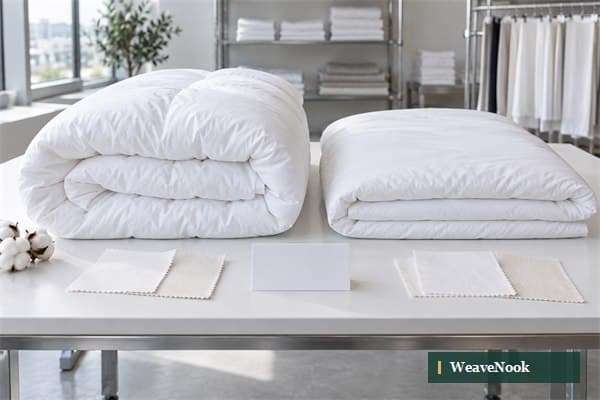
Direct answer: Specify synthetic filling by verified fibre identity, fineness, length and crimp form, then compare finished-duvet loft and care behaviour. The word microfiber alone does not define the product.
Introduction
“Microfiber filling” appears in many duvet quotations, yet it is not a complete technical specification. Two polyester fills marketed with the same adjective can differ in fibre fineness, cut length, crimp form, hollow structure, finish and blend ratio. These differences affect how a filling is processed, how evenly it occupies chambers and how the finished duvet behaves after care. A buyer who accepts the label without a sample and test plan may receive a product that looks similar in a compressed bag but feels quite different on a bed.
This guide is for hotel and retail buyers comparing synthetic duvet options. It turns denier, crimp and loft into practical questions, while keeping their limits clear. It does not assert that one fibre geometry is universally best or that WeaveNook has measured a particular customer’s filling. The right evidence combines fibre identification, representative development samples and observations of the finished duvet under its intended handling and laundering route.
Begin with the duvet product category and define the desired size, warmth positioning and care route. If the project compares down with synthetic, also review the duvet warmth guide. A synthetic fill’s denier is not equivalent to down fill power, and neither number alone determines finished-product warmth. The purchase decision should be stated in terms of the assembled product and the customer’s application.
Understand the material descriptors
Denier is a measure of linear mass, not a quality grade
Denier expresses fibre linear density. A lower value generally describes a finer fibre, but buyers should not treat “lower” as automatically softer, warmer or longer-lived. Fibres are processed into a three-dimensional filling, and their finish, length and crimp alter the resulting structure. A quoted denier without a tolerance, identification method and lot control is weak evidence. Ask the supplier whether the value refers to every fibre in a blend or to a principal component.
The IDFL polyester-fill testing overview discusses denier, staple length and crimp as distinguishable characteristics in synthetic filling. It also illustrates why material identification cannot rest on an attractive marketing name. Request a report or retained sample for the actual proposed lot when a claimed fibre property affects price or label wording. The method and scope should be visible; a microscopy observation and a finished-duvet performance test answer different questions.
Crimp helps create a filling structure
Crimp describes waviness or curl that can influence how fibres interlock and maintain bulk. Mechanical and spiral forms may behave differently in a blend. Do not order “high crimp” without defining what should be observed and how. A supplier may present a loose handful of fill that appears springy, yet the same material may settle or redistribute when enclosed in a chamber. Ask to compare the fill in the intended shell and quilting geometry.
Fibre length and surface finish also matter. Shorter fibres may process differently from longer ones; lubricating finishes can influence handling and hand feel. Hollow fibres introduce another design variable. None of these descriptors guarantees a duvet will survive repeated hotel washing. They are inputs to a development hypothesis that needs practical evidence. Write the approved material code and relevant properties into the bill of materials so a later supplier substitution cannot be hidden under the word “microfiber.”
| Descriptor | Buyer should ask | Verify on |
|---|---|---|
| Fibre identity | What polymer or blend is supplied? | Traceable bulk sample |
| Denier or fineness | What range and method support the claim? | Representative fill lot |
| Staple length | Does it match the approved processing route? | Identified input material |
| Crimp form | Is it mechanically or otherwise formed? | Material review and finished trial |
| Hollow/solid structure | Is it part of the claimed design? | Microscopy or suitable lab method |
| Finished loft | Does the duvet retain its profile? | Made-up duvet after agreed handling |
Define the desired finished-product experience
Hotel use is not retail shelf use
A hotel may value straightforward laundering, predictable drying and consistent thickness across replenishment orders. A retail product may emphasise a soft first touch, lofty presentation and compact packaging. A microfiber filling sample that excels on one criterion may be a poor choice for the other. Tell the development team which trade-offs matter before requesting alternative fibre blends. “Premium feel” is a discussion prompt, not an acceptance limit.
Try the assembled duvet on the intended bed with the correct cover. Note drape, chamber fullness, edge profile and whether the fill shifts under ordinary handling. If a hotel housekeeping team will shake and fold the duvet daily, observe that routine. For retail, assess the product after the proposed bagging and recovery period. A photogenic sample taken straight from the filling machine is not a substitute for the state in which the buyer’s customer will use it.
Warmth needs its own evidence
Two polyester duvets can have the same filling mass and different thermal behaviour because trapped air, shell construction and thickness differ. If warmth positioning affects the offer, request a suitable finished-product thermal test or an agreed comparative programme. The IDFL natural and synthetic fill testing options distinguish material identity from finished-product assessments. Do not equate denier with a TOG result or advertise a “winter” rating solely from a fibre supplier’s brochure.
If a buyer wants several seasonal grades, create separate fill maps and product codes. A lighter grade can be appropriate even when the same raw material is used, but mass and chamber allocation should be explicit. Avoid silently compressing a thick sample to meet carton targets and then using its pre-compression photo as the delivered appearance. Test the actual packed unit and include recovery instructions if needed.
Turn the decision into a sample brief
Share the product, target market, planned quantity and microfiber duvet fill denier criteria. We can discuss a suitable sample and quotation route.
Get a QuoteRun a controlled filling development trial
Change one meaningful variable at a time
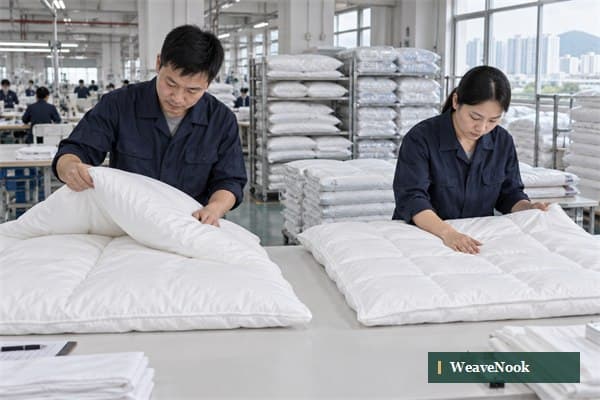
Make prototypes that keep shell, size, quilting and net mass stable when the aim is to compare fibre structure. If the intended commercial comparison is equal warmth at different weights, then mass can be varied deliberately, but the trial sheet must show it. Code every sample. Ask the sample room to record feed behaviour, clumping, chamber filling consistency and any difficulty retaining an even distribution. Production feasibility belongs in the decision, not just consumer hand feel.
Do not infer bulk repeatability from a single carefully hand-filled sample. A small pilot run using the intended equipment can reveal whether fibres bridge at a feed point, disperse unevenly or need special handling. Photograph the filling distribution before closure where practical. Record any manual intervention that would not be economical in bulk. If a low-cost fibre looks acceptable only after extra labour, the quote needs to reflect that.
Prepare care and recovery observations
Set the actual care route: domestic wash, commercial laundry or dry-cleaning instruction as appropriate to the article. Follow the approved procedure and compare thickness, clumping, drying behaviour, shell distortion and feel at consistent recovery times. A loft measurement should identify the location and the pressure or reference method used. Squeezing a corner by hand can reveal a concern, but it is not a reproducible numerical test.
For compression packaging, keep an unpacked control sample. Record duration of compression, carton conditions, time after opening and the physical recovery state. Do not assert a universal “fully recovers in 24 hours” rule. Different fills and constructions can behave differently. The pillow compression guide provides a general example of controlled recovery thinking; the duvet trial must still be validated on its own product.
Qualify the material and the supplier
Match certificates to the actual fill lot
If a supplier provides a generic polyester certificate, check whether it identifies the material code and batch used in the duvet. A report on a different fibre blend is not evidence for this one. If the product uses a blend of different deniers or crimp types, require a composition description and approval of the blended sample. A change in lubricant finish or cut length can affect processing without changing the broad polymer label, so changes should be recorded.
Ask how incoming fill is stored and protected from mix-up. A pilot filling trial should use material drawn from an identified lot, and its sample ID should connect to the retained approved duvet. For a repeat programme, define the checks that detect drift. Those may include visual fibre comparison, mass control, dimensional checks and targeted independent testing where necessary. Do not require expensive testing without a decision it can inform.
Verify the shell and fill as a system
Fine fibres can escape through unsuitable fabric or needle holes. Assess the completed shell, seams and filling combination rather than assuming a high thread count eliminates migration. A shell designed for down is not automatically optimal for polyester, nor vice versa. Check tactile feel, air movement and care after assembly. If a finish is added to contain fibres, ensure it does not create an unwanted hand, noise or drying problem.
For the final sample, review filling distribution in each chamber, corner shape and edge finish. A product may weigh correctly but have thin zones if fibres do not disperse. The duvet net-fill guide describes mass controls; use an additional distribution check for this material. If leakage or clumping appears, isolate whether the cause is fibre, shell, stitching or filling process before changing all four at once.
Evaluate quotations on a comparable basis
Price per kilogram of raw fill is not enough. Compare required net mass, expected processing loss, labour, quilting method, shell cost, test requirements, care performance and freight volume. A material with a higher unit cost may permit a different construction, but that must be demonstrated on a finished sample. Conversely, a cheaper fibre that demands manual correction or produces high variability may cost more in production. Ask for a costed alternative, not an undocumented substitution.
Specify whether the offer includes a lab-backed fibre identity statement, a development run and repeated care checks. If a buyer plans to advertise “microfiber,” confirm what that term means under the target market’s textile labelling expectations. Avoid unsupported claims such as hypoallergenic, recycled content or exceptional warmth unless the specific product and claim have appropriate evidence. Technical clarity usually improves the sales story more than inflated adjectives.
At shipment inspection, compare the produced duvet with the current approved sample and bill of materials. Check carton codes, filling lot records, size, net mass plan, appearance and any agreed recovery test. A change request should identify whether it affects filling structure, processing or consumer copy. Retain one current approved specimen, but do not pretend a physical sample alone specifies denier or polymer identity. Pair it with the written material record.
Prepare a useful supplier brief
Send finished sizes, required hand feel, intended market, care route, proposed fill mass, shell construction, quilting map, pack format and order volume. State which fibre properties are controlled and which are development options. Ask the supplier for two or three named alternatives with identifiable material lots and a clear explanation of their trade-offs. If the project has a target TOG or performance goal, include it separately from the fibre descriptor.
Set sample approval stages: raw material selection, pilot duvet, care trial and production reference. Agree who pays for independent tests and destructive specimens. Request that any material change be disclosed before bulk production, even if the new fibre looks similar. A repeatable sourcing programme depends on stable definitions, not only a successful first sample.
Frequently Asked Questions
Does lower denier always make a softer duvet?
No. Fineness can influence feel, but fibre length, crimp, finish, shell and construction also matter. Compare completed samples under the same conditions. If the denier claim affects cost or labelling, verify the actual material lot with an appropriate method rather than relying on the adjective “microfiber.”
Is a hollow fibre warmer than a solid fibre at the same mass?
It may behave differently, but there is no universal ranking from the cross-section alone. Finished warmth depends on loft, trapped air, shell, fill distribution and test state. Use a controlled finished-product comparison if warmth matters. Avoid turning a material diagram into a quantified TOG claim.
How should a hotel check wash durability?
Use its intended laundry route and defined sample comparisons. Record drying, clumping, thickness, feel and the ability to redistribute filling after care. Compare the washed article with an identified control. A single attractive post-wash photo is not a durability test, and a lab result should be interpreted within its method scope.
Can the supplier change to another polyester fill without notice?
That should be governed by the purchase agreement. Denier, crimp, staple length and finish can change product feel and processing even when polymer identity is unchanged. Ask for a documented change request, representative samples and any retesting needed for the original claim or care plan before approving a substitution.
Conclusion
Microfiber is a starting description, not a finished duvet specification. Define the fibre properties that matter, then validate a representative assembled product through filling, care and packaging trials. Keep raw-material identity, net fill mass, loft and thermal evidence distinct. This gives buyers a credible basis for comparing proposals and a usable control plan for repeat production.
Primary sources and method boundaries
Sources reviewed October 9, 2026. Illustrative calculations and proposed review checklists are not certified test results. Confirm the applicable method, edition and acceptance limits with your laboratory and customer.
Send your project requirements
Email info@WeaveNook.com with sizes, materials, care route, volumes and destination. Project-specific evidence and capability must be confirmed for your order.
Send Your Requirements