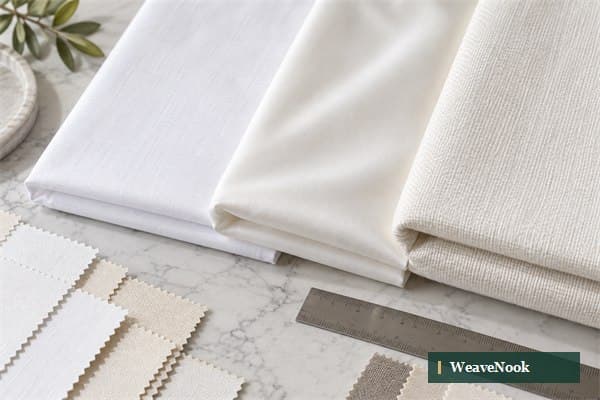
Direct answer: Buyers should check a physical colour or lab-dip reference, artwork version, print scale and direction, hem or cuff detail, lightfastness or care expectations where relevant, and final labels and packaging. Approve colour and design on the finished sewn sheet, because large panels, hems and fitted-sheet tension can change the visual result.
1. Define the buyer decision
Bed sheets create a broad, visible colour field. Small differences in white tone, print scale, stripe direction or coloured hem can be obvious on a made bed, even when the fabric looked correct in a small swatch.
Use a bed-level visual approval. It reveals how colour, drape, flat-sheet fold, fitted-sheet tension and pillowcase coordination look in the customer’s intended setting, then provides a more reliable reference for in-line and shipment inspection.
2. Build a checkable specification
The following points turn this buying question into details that can be stated in an RFQ and reviewed on a finished sample.
Colour standard
Approve a named physical reference or lab dip on the actual fabric, with the product, finish and viewing condition clearly identified.
Print and stripe direction
State repeat, scale, direction, placement, match at hems and how the design changes across sheet sizes or pillowcases.
Sewn detail
Define hems, cuff, stitch colour, embroidery, label placement and any decorative trim that affects the bed-level presentation.
Packaging communication
Align pack artwork, product photo, colour name, size identity and accurate material information with the approved finished SKU.
Ready to compare a real specification?
Send your bed sheets color and design sourcing requirements for a focused quotation and sample discussion.
Get a Quote3. Set the sample and inspection route
Factory colour checks should use the approved physical standard alongside the correct fabric and size. A print or stripe review must include cutting and sewing orientation, especially on fitted-sheet corners and flat-sheet hems. Shipment inspection should compare sampled goods and labels with the released colourway and pack reference.

4. Compare the available approaches
| Approval form | What it controls | Risk if missing |
|---|---|---|
| Lab dip | Colour on fabric | Bulk shade may be judged against an unclear source |
| Strike-off | Print result and direction | Seams and repeat may be unplanned |
| Made-bed sample | Whole-sheet presentation | Visual imbalance can be missed |
5. Avoid these sourcing mistakes
- Naming a shade without a physical or controlled reference
- Not defining stripe direction on fitted sheets
- Approving a print at one size but not reviewing scale on another
- Using packaging colour renders instead of final product approval
Frequently asked questions
Why does white bedding need colour approval?
White can vary in undertone, finish and fabric appearance, so a named physical reference helps maintain range consistency.
How should stripe direction be specified?
State the direction relative to the finished sheet, bed and hem, then show it in artwork and approve a sewn sample.
Can a print change across sizes?
It can, but the intended scaling, repeat or placement rule should be documented for every relevant SKU.
Should sheet labels use a colour name?
Use an approved SKU and colour identity that matches the product, pack and warehouse system; keep consumer wording accurate and consistent.
Turn this decision into an approved brief.
Share the product application, quantity and the specification points above. WeaveNook can then discuss samples and a quotation based on the same finished-product requirements.
Send Your Requirements