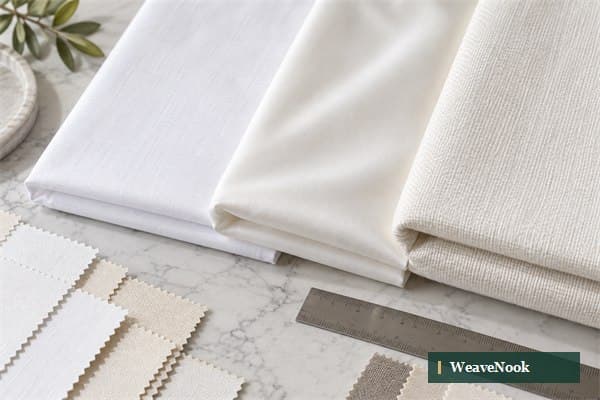
Direct answer: Buyers should check fibre composition, yarn and weave, declared thread-count convention where used, relevant fabric weight, finish, opacity, hand feel and care performance. Thread count is only one description of certain woven sheet fabrics; it does not by itself establish softness, durability, breathability or suitability for the planned channel.
1. Define the buyer decision
The most credible sheet specification explains what the fabric is and how the finished sheet should perform, rather than relying on one headline number. This helps a buyer compare two products that may use different yarn, weave, finish or counting language.
Choose fabric by the customer promise and operating environment. Crisp hotel-style sheets, smooth retail sateen-like products, easy-care blends and brushed constructions can each be appropriate when their composition, construction and care route are stated honestly.
2. Build a checkable specification
The following points turn this buying question into details that can be stated in an RFQ and reviewed on a finished sample.
Fibre and yarn
Record the declared fibre composition and yarn direction where relevant, then verify the finished sample reflects the intended hand feel and product position.
Weave and thread count
Specify the weave and, when thread count is part of the brief, how the requested claim relates to the actual woven fabric rather than treating it as a stand-alone grade.
Weight and finish
Use relevant finished-fabric weight, opacity, brushing, peach finish or other surface treatment details that affect feel, drying and presentation.
Finished-sheet evaluation
Review the fabric after hemming, elastic insertion where applicable, washing and fitting to see how the complete sheet performs.
Ready to compare a real specification?
Send your bed sheets fabric and thread count sourcing requirements for a focused quotation and sample discussion.
Get a Quote3. Set the sample and inspection route
A sheet-fabric approval should include a finished sewn sample because hems, elastic, dark colours and fitted-sheet tension can reveal differences not visible in a swatch. Factory testing records should identify the approved fabric and care conditions; shipment inspection should verify the correct finished SKU is packed.

4. Compare the available approaches
| Fabric indicator | What it helps compare | What else is needed |
|---|---|---|
| Fibre composition | Base material direction | Weave, yarn, finish and sample |
| Thread count | Some woven-density claims | Counting clarity and full construction |
| Finished sample | Actual feel and use | Controlled specification for repeatability |
5. Avoid these sourcing mistakes
- Buying the highest thread-count claim without reviewing the fabric construction
- Comparing samples with different finishing as if they were the same fabric
- Ignoring opacity on light-colour sheets
- Approving fabric before checking how it fits and launders as a sheet
Frequently asked questions
What does thread count describe?
It is commonly used to describe the number of threads in a woven area, but buyers should also evaluate the fibre, yarn, weave, finish and finished sample.
Is a lower thread count automatically poor quality?
No. A suitable, well-specified woven fabric should be judged in the context of its intended use and complete construction.
Should buyers specify GSM for sheets?
It can be a useful finished-fabric control where relevant, but it should sit with composition, weave, finish, hand feel and care requirements.
How can a buyer avoid unsupported fabric claims?
Use accurate declared composition and construction, retain the approved sample and verify any claim before using it on product or packaging.
Turn this decision into an approved brief.
Share the product application, quantity and the specification points above. WeaveNook can then discuss samples and a quotation based on the same finished-product requirements.
Send Your Requirements