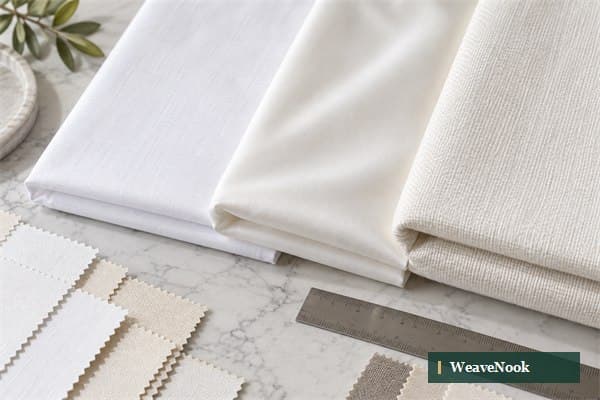
Direct answer: Buyers should check finished width and length, mattress dimensions and depth for fitted sheets, elastic construction, flat-sheet allowance, pillowcase fit, shrinkage conditions, tolerances and destination-market naming. The buyer should approve fit on the intended mattress and measure finished samples by one stated method before production.
1. Define the buyer decision
A fitted sheet that slips off a deep mattress, or a flat sheet that cannot be tucked to the desired presentation, is a fit-specification failure even when the fabric and sewing appear sound. Precise dimensions turn a consumer size name into an executable pattern.
Write the mattress and bed interface first, then the sheet dimensions. This gives the factory the information needed to plan pocket depth, elastic route, cut size, finished size and the relevant sample test after care.
2. Build a checkable specification
The following points turn this buying question into details that can be stated in an RFQ and reviewed on a finished sample.
Mattress matrix
State width, length, depth, topper assumptions and bed type for each fitted-sheet SKU; do not infer depth from a size name.
Flat-sheet presentation
Specify finished dimensions and the intended tuck, drop or hotel-fold presentation so the buyer and factory are reviewing the same result.
Elastic and pocket construction
Record pocket depth, elastic coverage, corner construction and expected fit rather than using a broad deep-pocket label.
Tolerance and care basis
Define how sheets are measured, acceptable tolerance and whether care-related change is reviewed under stated conditions.
Ready to compare a real specification?
Send your bed sheets size and fit sourcing requirements for a focused quotation and sample discussion.
Get a Quote3. Set the sample and inspection route
For fitted-sheet development, installation preparation includes fitting the sample on the stated mattress dimensions, checking corner recovery and assessing the product after the agreed care route. Shipment inspection can confirm finished measurements and packed size identity, but it should use the same measurement basis as sample approval.

4. Compare the available approaches
| Fit reference | Benefit | Required detail |
|---|---|---|
| Market size label | Easy customer navigation | Finished measurements and local convention |
| Mattress specification | Real fitted-sheet interface | Width, length, depth and topper assumption |
| Made-bed sample | Shows actual use | Approved measurement and care records |
5. Avoid these sourcing mistakes
- Writing “fits queen” without mattress depth
- Using a flat-sheet size copied from a different market
- Measuring samples before and after wash without naming the condition
- Approving elastic visually without fitting to the intended mattress
Frequently asked questions
What is pocket depth in a fitted sheet?
It is the construction dimension intended to accommodate mattress depth and fit; buyers should specify it together with mattress width, length and the elastic design.
Why should flat-sheet drop be specified?
The desired drop and tuck affect finished dimensions, bed presentation and material use, especially in hospitality programmes.
How do buyers account for mattress toppers?
State the combined mattress-and-topper depth and require the sample fit to be reviewed against that intended configuration.
What should be on the sheet size label?
Use the approved market size name and accurate product identity, supported by the finished-size matrix and applicable care or composition information.
Turn this decision into an approved brief.
Share the product application, quantity and the specification points above. WeaveNook can then discuss samples and a quotation based on the same finished-product requirements.
Send Your Requirements