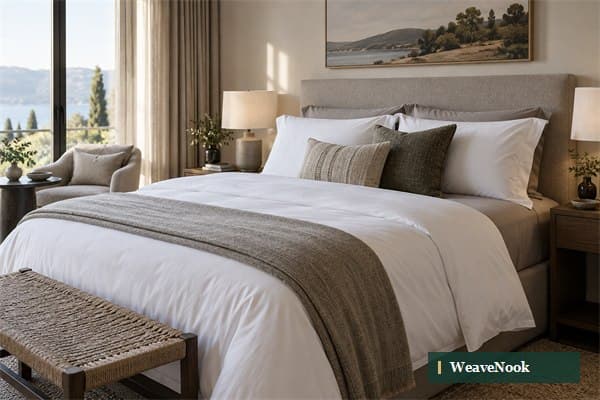
Direct answer: Build a boutique hotel bedding program around room type, climate, bed presentation, guest feel and housekeeping routine. Choose a limited group of compatible duvets, pillows, linens, throws and cushions, then document measurements, materials, colours, care and replacement requirements for each item.
1. Define the buyer decision
Boutique hotels often want bedding that feels distinctive without creating an impossible housekeeping or replenishment task. The most successful program balances visual direction with stable, measurable product specifications.
A layered bed can deliver an editorial look, but each additional item has a storage, laundry and replenishment implication. The buyer should identify which products are guest-critical, which are decorative and which can vary by season or suite type.
2. Build a checkable specification
The following points turn this buying question into details that can be stated in an RFQ and reviewed on a finished sample.
Room hierarchy
Map standard rooms, suites and specialty rooms so the program can share core items while reserving distinctive layers for high-visibility spaces.
Bed presentation
Specify the intended layers, fold, pillow count, decorative pieces and colour placement using measured items and approved references.
Housekeeping workflow
Discuss what must be removed, laundered, folded or replaced daily. Product application matters as much as the styled room image.
Replenishment plan
Keep a record of core SKU specifications and colours so future replacement orders can match the approved program.
Ready to compare a real specification?
Send your boutique hotel bedding program requirements for a focused quotation and sample discussion.
Get a Quote3. Set the sample and inspection route
For boutique hotel programs, review a bed-set sample or clearly staged product combination where possible. It is easier to identify mismatched proportions, colour balance or component labels before the bulk products are packed separately.

4. Compare the available approaches
| Layer type | Guest role | Operational question |
|---|---|---|
| Core duvet and pillows | Primary sleep comfort | Can the specification be replenished consistently? |
| Sheets and duvet cover | Touch and visual base layer | Does the care routine support the selected fabric and finish? |
| Throw and cushions | Decorative identity | How will covers, fills and seasonal replacement be managed? |
5. Avoid these sourcing mistakes
- Designing every room as a one-off without a core specification
- Selecting decorative cushions without planning removable covers or replacement
- Using a styled photo instead of a measured product matrix
- Ignoring storage and laundry for secondary layers
Frequently asked questions
How many pillows should a boutique hotel bed have?
The number should reflect mattress size, guest expectation, room styling and housekeeping capacity; document it by room type rather than using a universal rule.
Can boutique hotels use custom colours?
Yes. Provide a colour reference, product placement and repeat-order plan, then approve the actual fabric or finished sample before bulk production.
Should decorative cushions be supplied with removable covers?
That depends on the intended care and replacement method. Consider cover closure, fill and laundering when specifying the item.
How can a hotel plan replenishment?
Keep a final SKU matrix, approved samples or records, colour references, labels and packaging details for each core item.
Turn this decision into an approved brief.
Share the product application, quantity and the specification points above. WeaveNook can then discuss samples and a quotation based on the same finished-product requirements.
Send Your Requirements