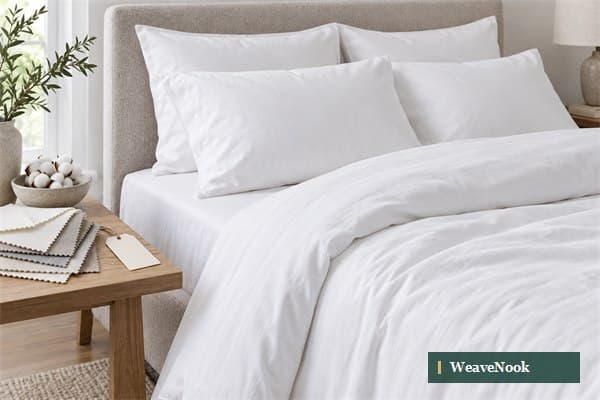
Direct answer: When planning hypoallergenic bedding, define the intended product position and the exact customer-facing claim. Then review material composition, product construction, any requested test evidence and destination-market rules with qualified advisers. Avoid medical or absolute claims unless they are properly substantiated for the product and market.
1. Define the buyer decision
Hypoallergenic is widely used in bedding marketing, but it can mean different things to different customers. Buyers should separate material choices, product testing and approved marketing language rather than assuming that a familiar fill or fabric supports every claim.
A bedding product can be designed around easy care, removable covers, familiar synthetic fills or other customer preferences without making unsupported health promises. The most credible product language explains what is actually specified and documented.
2. Build a checkable specification
The following points turn this buying question into details that can be stated in an RFQ and reviewed on a finished sample.
Claim language
Write the proposed words before packaging and advertising are designed. This makes it possible to check whether the claim is appropriate and supported.
Material direction
State the chosen shell, fill, cover or removable component and why it fits the intended product application, without treating material type as a medical guarantee.
Care instructions
Care can influence how a product is maintained. Provide clear, accurate instructions for the approved construction and market rather than generic advice.
Evidence and market review
Where a buyer needs test evidence or a regulated claim, define it early and consult qualified market or compliance advisers.
Ready to compare a real specification?
Send your hypoallergenic bedding claims guide requirements for a focused quotation and sample discussion.
Get a Quote3. Set the sample and inspection route
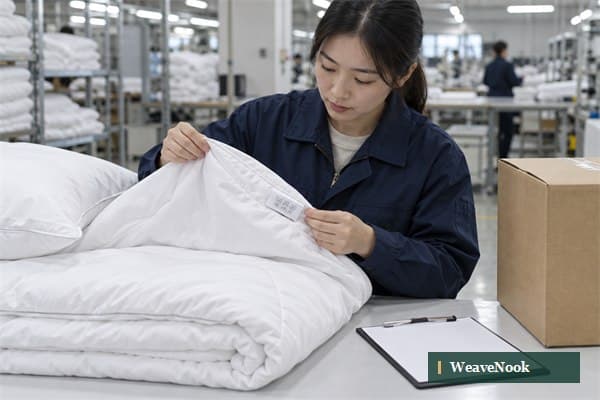
During product development, factory teams can confirm the approved material, construction, label and care instruction. Claims, regulatory interpretation and customer health statements should be reviewed by the buyer with the appropriate qualified advisers for the destination market.
4. Compare the available approaches
| Approach | More responsible wording direction | Avoid |
|---|---|---|
| Material description | State composition and construction clearly | Implying a medical outcome from a material name |
| Care guidance | Explain approved product-care instructions | Guaranteeing an outcome from washing alone |
| Test-supported statement | Use the scope and wording supported by evidence | Extending a test result beyond its product basis |
5. Avoid these sourcing mistakes
- Using hypoallergenic as an undefined blanket claim
- Making medical or absolute statements without evidence
- Confusing a material description with a finished-product performance claim
- Publishing marketing copy before the final product and document scope are reviewed
Frequently asked questions
Can a supplier guarantee a bedding product is hypoallergenic?
Product claims should be defined and supported appropriately for the market. Buyers should avoid broad guarantees and seek qualified advice for regulated or health-related language.
What can be stated safely on a product page?
Use accurate, approved descriptions of composition, construction and care. Only use performance or certification wording that is verified for the relevant product.
Do removable covers help with product care?
They may support the intended care routine when designed and labelled appropriately, but the exact benefit should not be overstated.
Should product claims be checked before packaging print?
Yes. Finalize copy only after the product specification, evidence and destination-market review are complete.
Turn this decision into an approved brief.
Share the product application, quantity and the specification points above. WeaveNook can then discuss samples and a quotation based on the same finished-product requirements.
Send Your Requirements