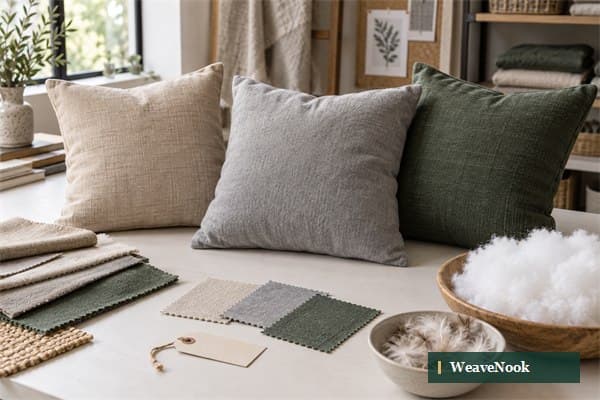
Direct answer: Specify retail cushions as a cover-and-insert system. State the finished cover size, insert size and fill, target fullness, cover fabric, closure, trims, care, labels and packaging. Review the filled sample in the intended retail presentation before approving bulk production.
1. Define the buyer decision
A cushion is a small product with several decisions inside it: the cover, the insert, the finished size, the perceived fullness, the closure and the way it is packed for retail. Buyers get better results when they specify the system, not only the cover fabric.
The finished look is driven by the relationship between cover and insert. A beautiful cover can look underfilled, distorted or difficult to pack if the insert size and fill are not matched to it.
2. Build a checkable specification
The following points turn this buying question into details that can be stated in an RFQ and reviewed on a finished sample.
Cover dimensions
State the finished cover measurement, seam allowance approach, shape and whether the size is measured flat or filled.
Insert relationship
Define insert dimensions and fill direction in relation to the cover. The buyer should approve the intended fullness visually, not only by a weight number.
Closure and trims
Specify zip, envelope, button or other closure along with piping, fringe, embroidery or labels where relevant to the retail design.
Retail packing
Plan polybag, sleeve, band, insert or box according to the collection’s shelf, e-commerce or gift use and the product’s filled volume.
Ready to compare a real specification?
Send your retail cushion fill guide requirements for a focused quotation and sample discussion.
Get a Quote3. Set the sample and inspection route
Review filled cushions under normal presentation conditions. Check the corners, fill distribution, insert recovery, closure function, trim alignment and retail package fit. These details are difficult to judge from flat cover photos.

4. Compare the available approaches
| Component choice | Effect | Approval check |
|---|---|---|
| Larger insert than cover | Can create a fuller presentation | Does the look remain balanced and packable? |
| Matched insert and cover | More controlled volume | Does it achieve the intended retail hand feel? |
| Removable cover | Can support separate care or replacement | Is the closure specified and functional? |
5. Avoid these sourcing mistakes
- Approving cover fabric without an insert plan
- Specifying fill weight without reviewing full appearance
- Ignoring trim placement at corners and seams
- Selecting packaging before the cushion’s filled volume is confirmed
Frequently asked questions
How do buyers choose a cushion insert size?
Choose it with the finished cover size and intended fullness in mind, then approve a filled sample rather than relying only on a dimensional rule.
Can inserts and covers be packed separately?
They can, depending on the retail and logistics plan. Specify the receiving and presentation process if assembly will happen after shipment.
What should a cushion sample include?
Include the final cover fabric, insert, fill, closure, trims, label and planned packaging or presentation.
Are decorative cushions suitable for hospitality?
They can be, but the product application, cover removal, laundry, storage and replenishment routine should be defined before selection.
Turn this decision into an approved brief.
Share the product application, quantity and the specification points above. WeaveNook can then discuss samples and a quotation based on the same finished-product requirements.
Send Your Requirements